27 bodies left hanging in Ecuador Prison Massacre: 32 Dead, 33 Injured, Two Gangs at War, and a System That Has Lost Control
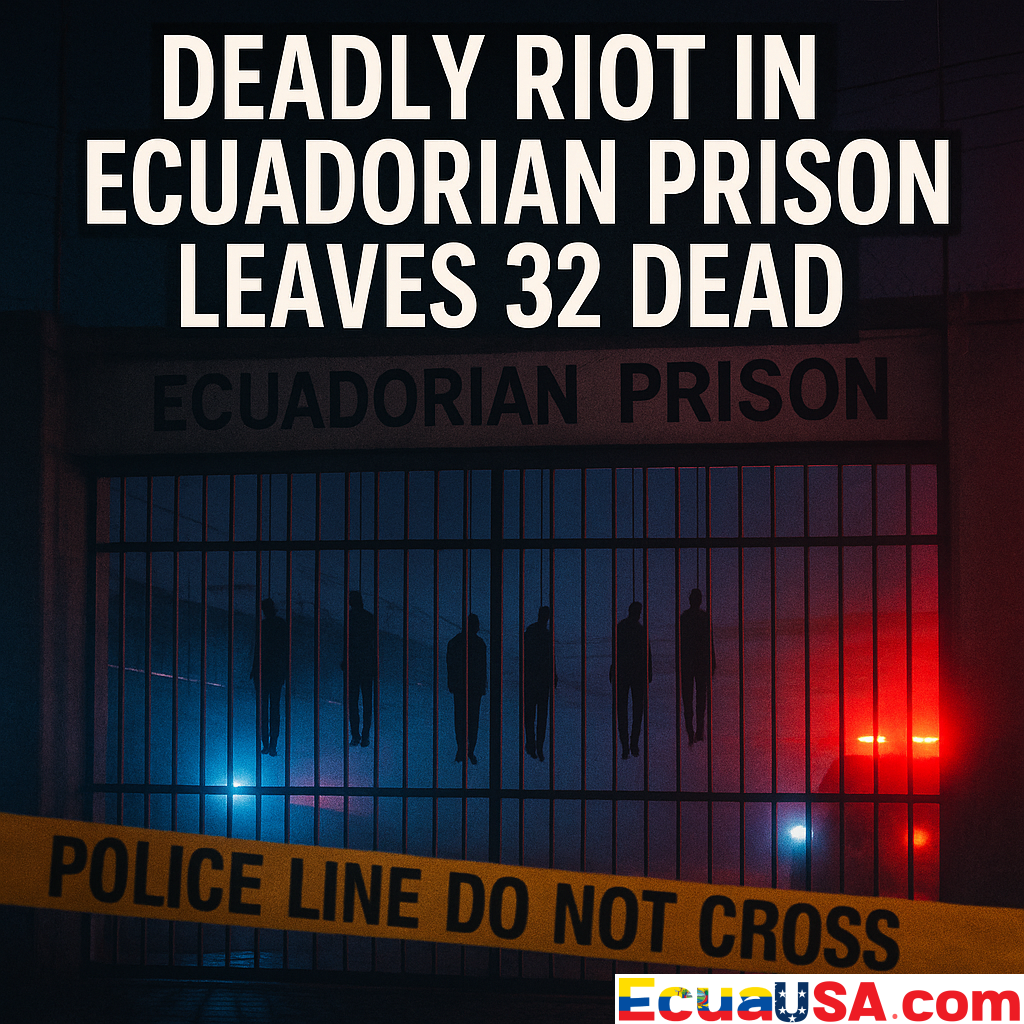
Machala Prison Massacre: 32 Dead, 33 Injured, Two Gangs at War, and a System That Has Lost Control
Machala, Ecuador. — New information confirms what inmates and their families had been saying since Sunday: there was a clear aggressor, a clear victim, and what happened inside the Machala Prison was not a spontaneous riot — it was a coordinated takeover and retaliation operation between prison gangs.
32 dead. 33 injured.
27 hanged.
Two massacres in 48 hours.
And a prison system on the brink of collapse.
⸻
Who was the aggressor? The gang that stormed the pavilion
According to penitentiary intelligence sources consulted by La Posta, the aggressor was a criminal faction that had been trying to regain power inside the prison for weeks.
Sources inside describe it simply as:
“The gang that went into the pavilion and wasn’t going to negotiate.”
The rival group — aligned with the structure that controlled the block — had been running that pavilion for months.
The assault was planned, not spontaneous:
• There were explosions to destabilize the block.
• There were gunshots to break through access points.
• There was a coordinated entry to overwhelm those inside.
The attacking gang took over the pavilion by surprise, cut internal routes, displaced the rival leaders, and executed the final phase: the hangings.
The 27 hanged inmates belonged mostly to the group that lost control.
⸻
Who was the victim? The pavilion that lost its power
The victimized group — considered the dominant faction in that section of the prison — had controlled the pavilion through weapons, money, and influence.
But everything changed with the announcement of new transfers to the Santa Elena maximum-security facility.
A SNAI official told La Posta:
“The pavilion was split. They knew the transfers were going to affect who held power. The attack came from those who wanted to fill that power vacuum before they were moved.”
In other words:
The victims were ambushed because their power structure was weakening.
The hanged inmates were members — or affiliates — of the faction losing dominance.
⸻
What has happened since the massacre: transfers, security ops, and fear
After the massacre, the State launched a three-phase response:
⸻
- Immediate transfers
More than 300 high-risk inmates were moved “for security reasons.”
This included leaders from both factions.
The Government says:
“We will not allow criminals to keep running prisons.”
But inside the system, inmates interpret it differently:
“Retaliation is coming.”
⸻
- Military takeover
The Armed Forces took perimeter control.
They searched for weapons, explosives, and internal routes used by gangs.
But according to personnel inside the prison, full control has not been restored.
One officer summed it up:
“This isn’t a security operation. It’s trying to put out a fire while another one is already starting.”
⸻
- Investigations — and strategic silence
The Prosecutor’s Office opened cases for:
• Murder
• Terrorism
• Criminal association
• Illegal weapons inside a prison
But no gang names or leaders have been officially identified yet.
Why?
Because authorities know this:
Naming gangs publicly escalates the war.
⸻
The current state of the prison: tense, divided, and waiting
Inside Machala, inmates say:
• One pavilion is “empty.”
• Two are “neutralized.”
• The rest are “waiting to see who takes control.”
The internal balance is broken.
The factions are reorganizing.
Guards remain overwhelmed.
And according to a La Posta source, another riot could erupt with one wrong move.
⸻
What no one wants to say out loud
La Posta puts it on the table:
1. The gangs plan better than the State.
2. Territorial control inside prisons is still intact.
3. Transfers don’t calm tensions — they ignite them.
4. Machala may not be the peak of the violence — it may be the beginning.
⸻
Conclusion: 32 dead, 33 injured, and an open war
Machala did not experience a “riot.”
It experienced a territorial military-style operation:
• One gang attacked.
• The other was exterminated.
• The State arrived after the fact.
The numbers speak for themselves:
• 32 dead
• 33 injured
• 27 executed by hanging
• 2 massacres in 48 hours
Ecuador is not facing a prison problem.
Ecuador is facing a war inside its prisons —
and this war is far from over.
Machala: 32 muertos, 33 heridos, dos bandas enfrentadas y un penal que perdió el control
Machala, Ecuador. — La nueva información confirma lo que varios internos y familiares ya venían diciendo desde el domingo: hubo un agresor claro, hubo una víctima clara y lo que ocurrió dentro del Centro de Privación de Libertad de Machala no fue un “motín espontáneo”, sino una operación de toma y revancha entre bandas.
32 muertos. 33 heridos.
27 colgados.
Dos masacres en 48 horas.
Y un sistema penitenciario que no aguanta más.
⸻
¿Quién fue el agresor? La banda que decidió tomar el pabellón
Según fuentes de inteligencia penitenciaria consultadas por La Posta, el grupo agresor fue una facción criminal que venía presionando desde hace semanas por recuperar control en el penal.
Fuentes internas la describen como:
“La banda que entró al pabellón y que no estaba dispuesta a negociar.”
El grupo rival —alineado a la estructura dominante dentro del penal— mantenía el control del pabellón donde ocurrió la masacre.
La irrupción fue planeada, no improvisada:
• Hubo explosiones para desestabilizar.
• Hubo tiros para romper los accesos.
• Hubo ingreso coordinado para sorprender a los internos del pabellón objetivo.
La banda agresora tomó el pabellón por sorpresa, cortó vías internas, desplazó a los líderes del bloque contrario y ejecutó la etapa final del ataque: las muertes por ahorcamiento.
Los 27 colgados pertenecían mayoritariamente al grupo que perdió control.
⸻
¿Quién fue la víctima? El pabellón que perdió el mando
El grupo víctima —considerado durante meses como la estructura dominante en ese sector del penal— había mantenido el control del pabellón a través de armas, dinero y contactos internos. Pero con el anuncio de nuevas transferencias hacia la cárcel de máxima seguridad de Santa Elena, su poder comenzó a debilitarse.
Según un funcionario del SNAI que habló con La Posta bajo anonimato:
“El pabellón estaba partido. Ellos sabían que el traslado iba a afectar quién manda adentro. El ataque vino de quienes querían llenar ese vacío antes de que los movieran.”
En otras palabras:
La banda víctima fue emboscada porque el equilibrio interno estaba cambiando.
Los colgados eran miembros —o asociados— del grupo que dejó de ser mayoría.
⸻
Lo que pasó desde la masacre: traslados, operativos y pánico interno
Después de la matanza, el Estado activó una respuesta en tres fases:
⸻
- Traslados inmediatos
Más de 300 internos de “alto perfil” fueron movilizados “por seguridad”.
Entre ellos, cabecillas de ambos grupos.
Un mensaje directo del Gobierno:
“No toleraremos que sigan mandando desde adentro.”
Pero dentro del sistema penitenciario, el mensaje se interpreta diferente:
“Se viene una retaliación.”
⸻
- Militarización del penal
Las Fuerzas Armadas tomaron control perimetral.
Se realizaron revisiones de armas y rutas internas, pero —según fuentes dentro del penal— no se ha logrado recuperar el control total de los pabellones.
Un funcionario que participó en el operativo lo resume así:
“No es un operativo. Es apagar un incendio mientras ya se está prendiendo otro.”
⸻
- Apertura de investigaciones — y silencios estratégicos
La Fiscalía abrió expedientes por:
• Asesinato
• Terrorismo
• Asociación ilícita
• Introducción de armas en centro carcelario
Sin embargo, no se han revelado nombres ni grupos responsables.
Las autoridades saben por qué:
nombrar bandas es escalar la guerra.
⸻
El estado actual del penal: tenso, dividido y expectante
Dentro de Machala, los mismos internos lo dicen:
• Un pabellón está “vacío”.
• Dos están “neutralizados”.
• Y los demás están “a la espera de quién manda ahora”.
El equilibrio interno está roto.
Los bandos están reestructurándose.
Los custodios siguen superados.
Y según una fuente de La Posta, otro motín podría estallar al primer movimiento mal calculado.
⸻
Lo que nadie quiere decir en voz alta
La Posta lo pone sobre la mesa:
1. Las bandas planifican mejor que el Estado.
2. El control territorial dentro de las cárceles sigue intacto.
3. Los traslados, lejos de calmar tensiones, las aceleran.
4. La masacre de Machala podría ser una antesala, no una excepción.
⸻
Conclusión: 32 muertos, 33 heridos y una guerra abierta
La prisión de Machala no vivió un motín.
Vivió una operación de control territorial:
• Un bando atacó.
• El otro fue exterminado.
• El Estado llegó después.
Los números son fríos pero contundentes:
• 32 muertos
• 33 heridos
• 27 ejecutados por ahorcamiento
• 2 masacres en 48 horas
Ecuador no enfrenta un problema carcelario.
Enfrenta una guerra dentro de sus cárceles.
Y esta guerra sigue muy lejos de terminar.