



AGARRANDO EL PASADO: PARANTHROPUS BOISEI REVOLUCIONA LA HISTORIA DEL USO DE HERRAMIENTAS CON EL DESCUBRIMIENTO DE UNA MANO DEXTERA
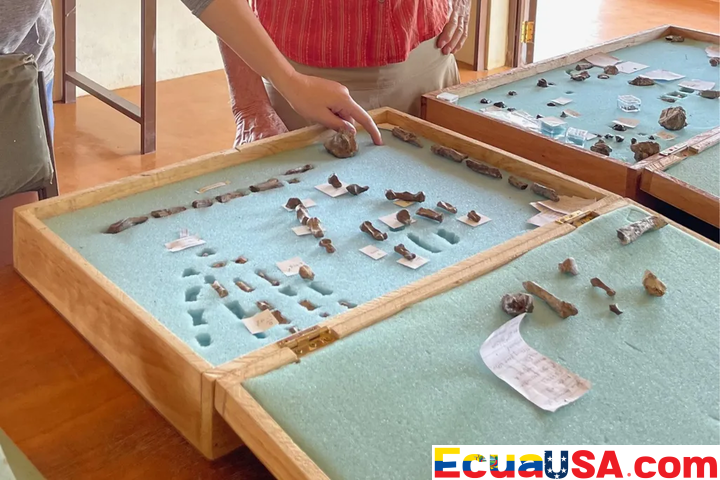
Cuenca de Turkana, Kenia—Durante décadas, la innovación humana temprana se ha contado como una historia dominada por el género Homo. Las herramientas de piedra antiguas encontradas junto a los parientes evolutivos robustos, Paranthropus, siempre se atribuyeron a nuestros antepasados directos. Ahora, un descubrimiento en la cuenca de Turkana, Kenia, está reescribiendo esa narrativa: el “Hombre Cascanueces”, Paranthropus boisei, poseía la destreza para usar herramientas, una habilidad que se creía exclusiva de Homo.
El hallazgo fósil—la primera mano y pie vinculados definitivamente a P. boisei—data de hace 1,5 millones de años, proporcionando nuevas perspectivas sobre las capacidades de este antiguo pariente. La mano izquierda reconstruida muestra proporciones humanas esenciales para manipulación precisa, conservando al mismo tiempo una fuerza similar a la de un gorila. Los investigadores destacan que esta combinación única no tiene paralelo conocido entre los homínidos, mostrando un ser adaptado tanto a su entorno como a su posible conjunto de herramientas.
La morfología de la mano sugiere fuertemente que P. boisei era un usuario activo de herramientas, desafiando la creencia de que la fabricación y uso de herramientas eran únicamente rasgos de Homo. Los huesos del pie fósiles confirman la locomoción bípeda completa, consolidando la posición de P. boisei como un homínido versátil y erguido.
Este descubrimiento reconfigura la narrativa de la evolución humana, revelando un paisaje más complejo de ingenio en homínidos tempranos. Considerado un callejón evolutivo, el Hombre Cascanueces surge ahora como un jugador sofisticado, capaz de manipular herramientas y cuestionar quién fue realmente el primero en moldear su mundo.
GRASPING THE PAST: PARANTHROPUS BOISEI SHAKES UP TOOL-USING NARRATIVE WITH DISCOVERY OF DEXTEROUS HAND
Turkana Basin, Kenya—For decades, early human innovation has been framed as a story dominated by Homo. Ancient stone tools found alongside robust evolutionary cousins of our genus, Paranthropus, were always attributed to direct ancestors. Now, a groundbreaking discovery in Kenya’s Turkana Basin is rewriting that narrative: the “Nutcracker Man,” Paranthropus boisei, possessed the dexterity to use tools—a skill once thought exclusive to Homo.
The fossil find—the first hand and foot definitively linked to P. boisei—dates back 1.5 million years, providing new insight into the capabilities of this ancient relative. The reconstructed left hand exhibits human-like proportions crucial for precise tool manipulation, while simultaneously retaining a powerful, gorilla-like grip. Researchers note this unique combination is unparalleled among hominins, highlighting a creature uniquely adapted both to its environment and potential toolkit.
The hand morphology strongly suggests that P. boisei was an active tool user, challenging the long-held belief that tool-making and usage were solely Homo traits. Complementary fossilized foot bones confirm full bipedal locomotion, solidifying P. boisei’s place as a versatile and upright-walking hominin.
This discovery reshapes human evolutionary narratives, revealing a more complex landscape of early hominin ingenuity. Once viewed as an evolutionary dead-end, the Nutcracker Man emerges as a sophisticated player, wielding tools and challenging assumptions about who first manipulated objects to shape their world.
APRENDENDO COM O PASSADO: PARANTHROPUS BOISEI REESCREVE A HISTÓRIA DO USO DE FERRAMENTAS COM DESCOBERTA DE MÃO DEXTERA
Bacia de Turkana, Quénia—Durante décadas, a inovação humana inicial foi vista como uma história dominada pelo gênero Homo. Ferramentas de pedra antigas encontradas junto aos robustos parentes evolutivos do gênero Paranthropus sempre foram atribuídas aos nossos ancestrais diretos. Agora, uma descoberta inovadora na Bacia de Turkana, Quénia, está reescrevendo essa narrativa: o “Homem Quebra-Nozes”, Paranthropus boisei, possuía a destreza para usar ferramentas, uma habilidade antes considerada exclusiva do Homo.
O achado fóssil—a primeira mão e pé definitivamente ligados a P. boisei—tem cerca de 1,5 milhão de anos, oferecendo novas perspectivas sobre as capacidades desse antigo parente. A mão esquerda reconstruída mostra proporções humanas essenciais para manipulação precisa, enquanto mantém uma força semelhante à de um gorila. Pesquisadores destacam que esta combinação única não tem paralelo conhecido entre hominídeos, mostrando um ser adaptado tanto ao ambiente quanto ao seu conjunto de ferramentas.
A morfologia da mão sugere fortemente que P. boisei era um usuário ativo de ferramentas, desafiando a ideia de que fabricar e usar ferramentas era exclusivo do Homo. Os ossos fossilizados do pé confirmam locomoção bípede completa, consolidando P. boisei como um hominídeo versátil e ereto.
Esta descoberta redefine narrativas da evolução humana, revelando um cenário mais complexo de engenhosidade entre hominídeos iniciais. Antes considerado um beco evolutivo, o Homem Quebra-Nozes emerge agora como um participante sofisticado, manipulando ferramentas e desafiando suposições sobre quem fez e usou as primeiras ferramentas.
AFFERRANDO IL PASSATO: PARANTHROPUS BOISEI RIVOLUZIONA LA NARRATIVA SULL’USO DEGLI STRUMENTI CON LA SCOPERTA DI UNA MANO DEXTERA
Bacino di Turkana, Kenya—Per decenni, la storia dell’innovazione umana è stata raccontata come una vicenda dominata dall’Homo. Strumenti di pietra antichi trovati accanto ai robusti parenti evolutivi del genere Paranthropus sono sempre stati attribuiti ai nostri antenati diretti. Ora, una scoperta rivoluzionaria nel Bacino di Turkana, Kenya, sta riscrivendo questa narrativa: l’“Uomo Schiaccianoci”, Paranthropus boisei, possedeva la destrezza per usare strumenti, abilità un tempo ritenuta esclusiva dell’Homo.
Il reperto fossile—la prima mano e piede collegati definitivamente a P. boisei—risale a circa 1,5 milioni di anni fa, offrendo nuove informazioni sulle capacità di questo antico parente. La mano sinistra ricostruita mostra proporzioni simili a quelle umane essenziali per la manipolazione precisa degli strumenti, mantenendo al contempo una presa potente simile a quella di un gorilla. I ricercatori sottolineano che questa combinazione unica non ha paralleli noti tra gli ominini, evidenziando un essere adattato sia all’ambiente che al suo ipotetico arsenale di strumenti.
La morfologia della mano suggerisce fortemente che P. boisei fosse un utilizzatore attivo di strumenti, sfidando l’idea consolidata che la fabbricazione e l’uso degli strumenti fossero prerogativa esclusiva dell’Homo. I fossili del piede confermano la locomozione bipede completa, consolidando il ruolo di P. boisei come ominino versatile ed eretto.
Questa scoperta ridefinisce la narrazione dell’evoluzione umana, rivelando un paesaggio più complesso di ingegno tra gli ominini primitivi. Un tempo considerato un vicolo cieco evolutivo, l’Uomo Schiaccianoci emerge ora come un attore sofisticato, capace di maneggiare strumenti e di sfidare le idee su chi ha realizzato e usato i primi utensili.
SAISIR LE PASSÉ : PARANTHROPUS BOISEI RÉINVENTE L’HISTOIRE DE L’UTILISATION DES OUTILS AVEC LA DÉCOUVERTE D’UNE MAIN DEXTRE
Bassin de Turkana, Kenya—Pendant des décennies, l’histoire de l’innovation humaine a été dominée par le genre Homo. Les outils en pierre anciens trouvés aux côtés de cousins évolutifs robustes du genre Paranthropus ont toujours été attribués à nos ancêtres directs. Une découverte majeure dans le bassin de Turkana, Kenya, réécrit désormais ce récit : le “Homme Casse-Noix”, Paranthropus boisei, possédait la dextérité nécessaire pour utiliser des outils, compétence jadis considérée exclusive à Homo.
La découverte fossile—la première main et le premier pied liés définitivement à P. boisei—date d’environ 1,5 million d’années, offrant un nouvel aperçu des capacités de ce parent ancien. La main gauche reconstruite présente des proportions humaines essentielles pour manipuler des outils avec précision, tout en conservant une force de préhension semblable à celle d’un gorille. Les chercheurs soulignent que cette combinaison unique n’a aucun parallèle connu chez les hominidés, révélant un être parfaitement adapté à son environnement et à son éventuel arsenal d’outils.
La morphologie de la main indique fortement que P. boisei était un utilisateur actif d’outils, remettant en question l’idée que la fabrication et l’utilisation d’outils étaient l’apanage exclusif d’Homo. Les os du pied fossilisés confirment la bipédie complète, consolidant P. boisei comme un hominidé polyvalent et redressé.
Cette découverte redéfinit les récits de l’évolution humaine, révélant un paysage plus complexe d’ingéniosité chez les hominidés primitifs. Considéré autrefois comme une impasse évolutive, l’Homme Casse-Noix apparaît désormais comme un acteur sophistiqué, capable de manipuler des outils et de remettre en cause les idées sur qui a fabriqué et utilisé les premiers outils.
DAS VERGANGENE GREIFEN: PARANTHROPUS BOISEI REVOLUTIONIERT DAS WERKZEUGVERWENDUNGSSZENARIO MIT ENTDECKUNG EINER GESCHICKTEN HAND
Turkana-Becken, Kenia—Seit Jahrzehnten wird die Geschichte der frühen menschlichen Innovation als Erzählung des Homo betrachtet. Alte Steinwerkzeuge, die neben robusten Verwandten der Gattung Paranthropus gefunden wurden, wurden stets unseren direkten Vorfahren zugeschrieben. Nun zwingt eine bahnbrechende Entdeckung im Turkana-Becken in Kenia Paläontologen dazu, diese Erzählung neu zu schreiben: der „Nussknacker-Mensch“, Paranthropus boisei, besaß die Geschicklichkeit, Werkzeuge zu benutzen—eine Fähigkeit, die einst ausschließlich Homo zugeschrieben wurde.
Die Fossilienfunde—die erste Hand und der erste Fuß, die eindeutig P. boisei zugeordnet werden—sind etwa 1,5 Millionen Jahre alt und liefern tiefe Einblicke in die Fähigkeiten dieses ausgestorbenen Verwandten. Die rekonstruierte linke Hand zeigt menschenähnliche Proportionen, entscheidend für präzise Werkzeugmanipulation, behält aber gleichzeitig einen kraftvollen, gorillaähnlichen Griff. Forscher weisen darauf hin, dass diese einzigartige Kombination unter Homininen unbekannt ist, was ein Wesen zeigt, das sowohl an seine Umwelt als auch an seine potenziellen Werkzeuge angepasst war.
Die Handmorphologie deutet stark darauf hin, dass P. boisei aktiver Werkzeugbenutzer war, was die langgehegte Vorstellung infrage stellt, dass Werkzeugherstellung und -nutzung ausschließlich Homo vorbehalten waren. Ergänzend bestätigen die fossilen Fußknochen die vollständige Zweibeinigkeit, was P. boisei als vielseitigen, aufrechtgehenden Homininen festigt.
Dieser Fund verändert die Narrative der menschlichen Evolution, enthüllt eine komplexere Landschaft früher Homininen-Innovation. Der einst als evolutionärer Sackgasse betrachtete Nussknacker-Mensch taucht nun als raffinierter Akteur auf, der Werkzeuge handhaben konnte und unser Verständnis darüber, wer die ersten Werkzeuge hergestellt und benutzt hat, neu definiert.


