LA INJUSTICIA CLIMÁTICA AL DESCUBIERTO: PEQUEÑAS NACIONES ENFRENTARÁN DOS MESES EXTRA DE ‘DÍAS SÚPER CALIENTES’
CLIMATE INJUSTICE EXPOSED: TINY NATIONS TO FACE TWO EXTRA MONTHS OF ‘SUPERHOT DAYS’
October 16, 2025 — A stark new climate report released today paints a grim picture of global heat inequality, revealing that small, ocean-dependent nations—the least responsible for global warming—will bear the most extreme brunt of dangerous heat by the end of the century. The study, a collaboration between World Weather Attribution and Climate Central, calculated the expected rise in “superhot days”—defined as temperatures hotter than 90% of comparable days between 1991 and 2020.1 The findings underscore the moral and geopolitical challenge of climate change.
Under current global commitments to curb emissions, the world is on track for 2.6 C (4.7 F) of warming by 2100.4 This trajectory, while an improvement over the catastrophic pre-Paris Accord path of 4.C, is still projected to add an average of 57 superhot days annually worldwide—nearly two additional months of dangerously high temperatures.6 The planet has already added 11 such days since 2015.
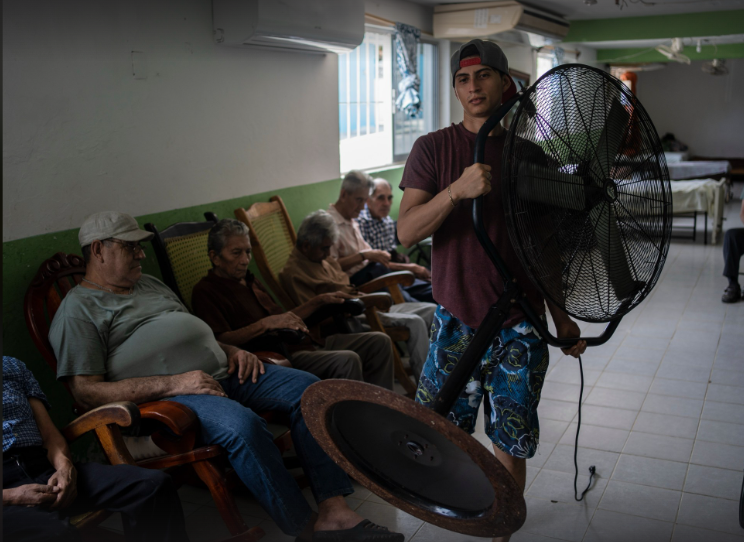
The most shocking revelation, however, is the profound disconnect between carbon emissions and heat exposure. The 10 countries set to experience the largest increase in dangerous heat days are almost all small, ocean-dependent nations, including Panama, the Solomon Islands, and Samoa.7 These countries collectively produce only 1 percent of global heat-trapping gases. Panama alone is projected to face an overwhelming 149 extra superhot days a year.8
In sharp contrast, the world’s top carbon polluters—the United States, China, and India—which together are responsible for 42 percent of the world’s carbon dioxide, will see only a modest increase of between 23 and 30 extra superhot days.9 This means the biggest polluters will face less than 1 percent of the total additional heat risk.10
Experts were quick to caution against complacency. Johan Rockstrom, Director of the Potsdam Climate Institute, warned that the current 2.6 C track “would still imply a disastrous future for billions of humans on Earth.”12 Co-author Friederike Otto confirmed that the additional heat is a deadly risk, stating the human toll “will definitely be tens of thousands or millions, not less.”13
The report, thus, serves as a powerful indictment of global environmental justice. University of Victoria climate scientist Andrew Weaver noted that this heat inequality “drives yet another wedge between have and have-not nations,” raising alarms about potential geopolitical instability fueled by a crisis they did not create.14 The findings challenge world leaders to acknowledge that the cost of climate action is being unfairly borne by those with the fewest resources.
(Spanish) LA INJUSTICIA CLIMÁTICA AL DESCUBIERTO: PEQUEÑAS NACIONES ENFRENTARÁN DOS MESES EXTRA DE ‘DÍAS SÚPER CALIENTES’
16 de octubre de 2025— Un nuevo y crudo informe climático publicado hoy dibuja un panorama sombrío de la desigualdad global de calor, revelando que las naciones pequeñas y dependientes del océano—las menos responsables del calentamiento global—soportarán la peor parte del calor peligroso a finales de siglo.15 El estudio, una colaboración entre World Weather Attribution y Climate Central, calculó el aumento esperado en los “días súper calientes”—definidos como temperaturas superiores al 90% de los días comparables entre 1991 y 2020.16 Los hallazgos subrayan el desafío moral y geopolítico del cambio climático.
Bajo los compromisos globales actuales para frenar las emisiones, el mundo se dirige a un calentamiento de 2.6 C (4.7 F) para el año 2100.19 Esta trayectoria, aunque es una mejora con respecto al catastrófico camino de 4.C anterior al Acuerdo de París, se proyecta que aún sumará un promedio de 57 días súper calientes anualmente en todo el mundo, casi dos meses adicionales de temperaturas peligrosamente altas.21 El planeta ya ha añadido 11 de esos días desde 2015.22
Sin embargo, la revelación más impactante es la profunda desconexión entre las emisiones de carbono y la exposición al calor. Las 10 naciones que experimentarán el mayor aumento en días de calor peligroso son casi todas pequeñas y dependientes del océano, incluyendo a Panamá, las Islas Salomón y Samoa. 23 Estos países producen colectivamente solo el 1 por ciento de los gases de efecto invernadero globales.24 Solo Panamá proyecta enfrentar la abrumadora cifra de 149 días súper calientes extra al año.25
En marcado contraste, los mayores contaminadores de carbono del mundo— Estados Unidos, China e India —que juntos son responsables del 42 por ciento del dióxido de carbono mundial, experimentarán solo un aumento modesto de entre 23 y 30 días súper calientes adicionales.26 Esto significa que los mayores contaminadores enfrentarán menos del 1 por ciento del riesgo de calor adicional total.
Los expertos se apresuraron a advertir contra la complacencia. Johan Rockstrom, Director del Instituto de Clima de Potsdam, señaló que la trayectoria actual de 2.6C “aún implicaría un futuro desastroso para miles de millones de seres humanos en la Tierra”.28 La coautora Friederike Otto confirmó que el calor adicional es un riesgo mortal, afirmando que el costo humano “será definitivamente de decenas de miles o millones, no menos”.
El informe, por lo tanto, sirve como una poderosa acusación contra la justicia ambiental global. El científico climático Andrew Weaver de la Universidad de Victoria señaló que esta desigualdad térmica “abre otra brecha entre las naciones con y sin recursos”, encendiendo las alarmas sobre una posible inestabilidad geopolítica alimentada por una crisis que ellos no crearon.30 Los hallazgos desafían a los líderes mundiales a reconocer que el costo de la acción climática está siendo asumido injustamente por aquellos con menos recursos.