



CONAIE’S COLD WAR: ECUADOR MINISTER CLAIMS PROTESTS ARE FUELED BY FACTIONS STILL LOYAL TO EX-LEADER LEONIDAS IZA
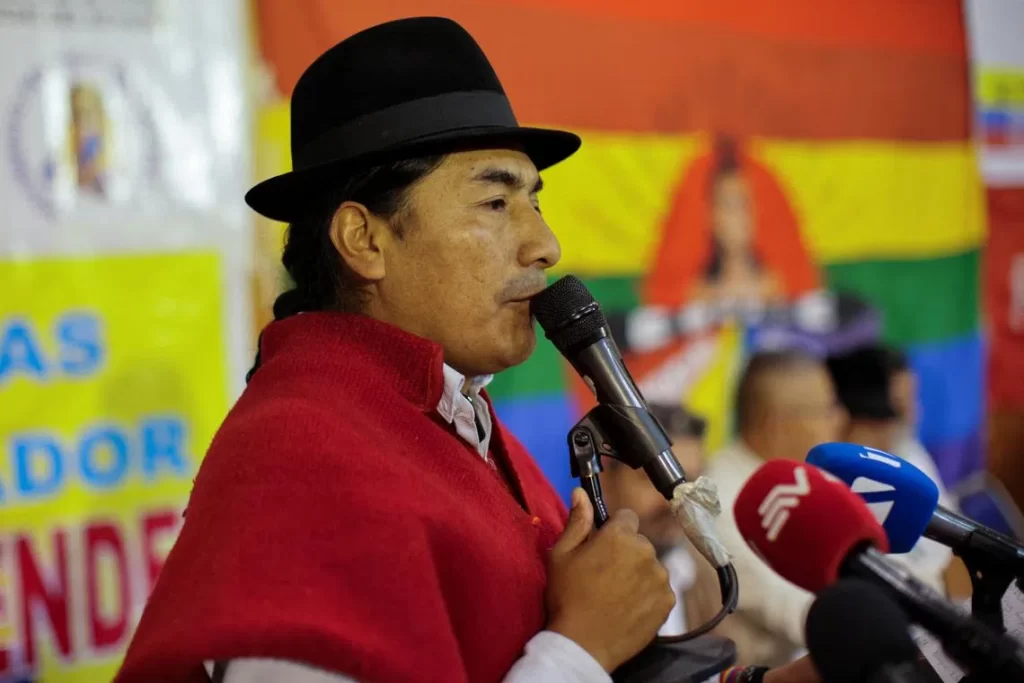
Political tensions in Ecuador have escalated following claims by Harold Burbano, the Minister of Economic and Social Inclusion (MIES), that ongoing protests and road blockades in Imbabura and other provinces are not solely driven by social demands. He asserts they are being strategically leveraged by internal factions of the indigenous movement that remain loyal to the former CONAIE president, Leonidas Iza.
In his analysis, Minister Burbano acknowledged that the Confederation of Indigenous Nationalities of Ecuador (CONAIE) is currently undergoing a leadership transition, highlighting the role of Marlon Vargas, who represents the Amazon region. However, he maintains that the current political friction persists because Iza “has not yet released the reins of the movement,” using dissident groups to continue the protests despite ongoing negotiations with the new government administration.
Burbano identified at least three distinct factors that he believes are fueling the continued climate of instability:
Internal Power Struggles: The resistance from factions loyal to Leonidas Iza, who are attempting to maintain pressure on the national government.Opportunistic Political Actors: The intervention of external political players, such as the Unidad Popular movement and figures like Pacha Terán, who are aiming to exploit the protests for electoral gains and influence the upcoming popular consultation and referendum process.Illegal Financing: A third and concerning element is the financing of the protests by illegal economies, with the Minister explicitly citing illegal mining and drug trafficking.While the Minister declined to provide further details regarding the extent of organized crime’s involvement in funding the demonstrations, he announced that the government’s Security Bloc has already initiated operations to re-establish control in critical provinces like Imbabura. Burbano’s claims transform the security crisis and protests into a complex web that merges electoral politics, indigenous leadership tensions, and the corrupting power of criminal economies.
LA GUERRA FRÍA DE LA CONAIE: BURBANO DENUNCIA QUE EL PARO EN ECUADOR ES INFLUENCIADO POR FACCIONES QUE AÚN RESPONDEN A LEONIDAS IZA
La tensión política en Ecuador se ha intensificado luego de que Harold Burbano, Ministro de Inclusión Económica y Social (MIES), señalara que las protestas y los cierres viales que se mantienen activos en Imbabura y otras provincias no se deben únicamente a demandas sociales, sino que están siendo impulsados por facciones internas del movimiento indígena que todavía obedecen a la línea del expresidente de la CONAIE, Leonidas Iza.
En su análisis, el Ministro Burbano reconoció que la Confederación de Nacionalidades Indígenas del Ecuador (CONAIE) se encuentra en un proceso de transición de liderazgo, destacando la figura de Marlon Vargas, quien representa a la Amazonía. Sin embargo, sostiene que el pulso político actual se mantiene porque Iza “aún no suelta las riendas del movimiento,” utilizando a grupos disidentes para continuar con las manifestaciones a pesar de los acuerdos o negociaciones con la nueva administración.
Burbano identificó al menos tres ingredientes que, a su juicio, están perpetuando el clima de inestabilidad:
Luchas Internas de Poder: La resistencia de las facciones que responden a Leonidas Iza, quienes buscan mantener la presión en el ámbito nacional.Actores Políticos Oportunistas: La intervención de actores políticos externos, como el movimiento Unidad Popular y figuras como Pacha Terán, que buscan aprovechar la coyuntura de las protestas para obtener réditos e incidir en el venidero proceso electoral de consulta popular y referéndum.Financiamiento Ilegal: Un tercer y preocupante ingrediente es el financiamiento de las protestas por parte de economías ilegales, mencionando explícitamente la minería ilegal y el narcotráfico.Aunque el Ministro no proporcionó detalles específicos sobre la implicación del crimen organizado en la financiación, adelantó que el Bloque de Seguridad del gobierno ya ha iniciado operativos para retomar el control en provincias críticas como Imbabura. La denuncia de Burbano convierte la crisis de seguridad y las protestas en un complejo entramado que fusiona la política electoral, las tensiones de liderazgo indígena y el poder corruptor de las economías criminales.


