



“Speaker Johnson Faces Backlash Amid Trump’s $230 Million DOJ Demand: ‘Taxpayer Dollars!’”
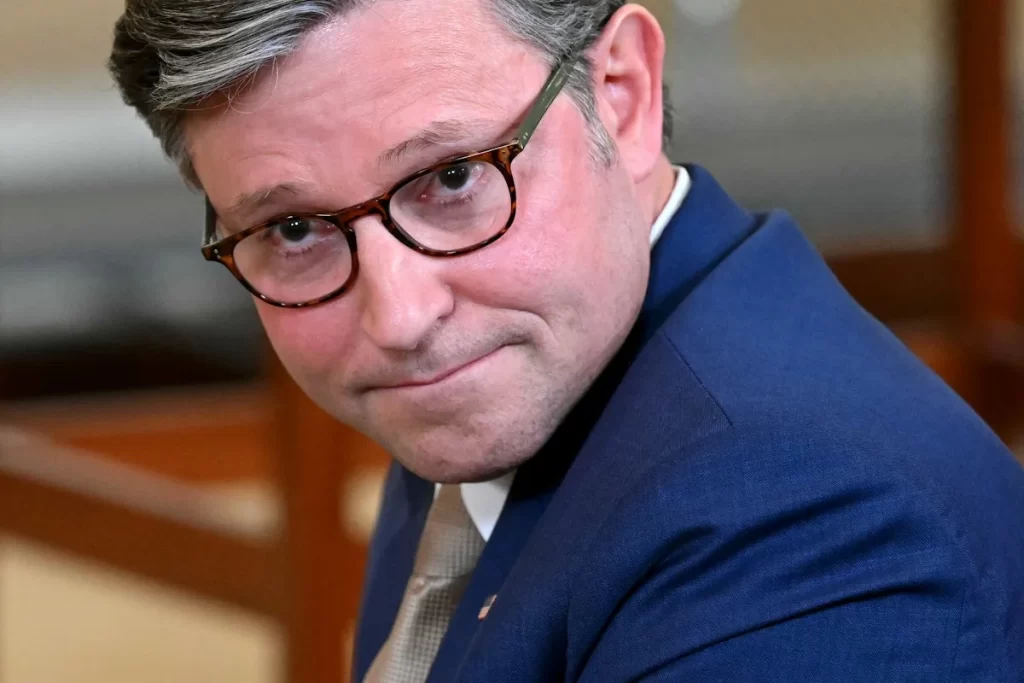
WASHINGTON — The fallout escalated yesterday after Donald Trump’s reported request for approximately $230 million from the U.S. Department of Justice (DOJ) prompted sharp reactions from both sides of the aisle, putting Mike Johnson, Speaker of the House, squarely in the spotlight.
According to multiple news outlets, Trump filed administrative claims that would require the DOJ — now under his administration’s control — to pay out hundreds of millions for investigations into his 2016 campaign ties to Russia and the August 2022 raid on his Mar-a-Lago estate.
Speaker Johnson’s Tightrope
Speaker Johnson, a longtime Trump ally, found himself walking a perilous tightrope. While he has largely supported the president’s agenda, he now faces mounting pressure to respond to what critics call an unprecedented use of taxpayer funds to benefit a sitting president.
In recent remarks, Johnson attempted to sidestep the core issue: whether the demand for compensation is appropriate and whether it sets a dangerous precedent. Sources say Johnson avoided committing to any specific action, reflecting the fraught political balancing act of supporting Trump while also guarding congressional oversight responsibilities.
Critics argue that by remaining non-committal, Johnson is signaling tacit acceptance and undermining fiscal accountability. As one political commentator put it: “This is taxpayer dollars! We should not be rubber-stamping a payout to the very office that oversaw the investigations.”
What Trump Says
When asked about the demand in the Oval Office, Trump acknowledged the claim but sought to frame it as a matter of correcting past wrongs. “I guess they probably owe me a lot of money for that,” he said, adding that any funds he receives would go “to charity or something nice.”
Yet the optics remain troubling: a president demanding a payout from federal agencies he manages raises potential conflicts of interest and ethical questions. Legal experts have noted that the scenario “has never happened in U.S. history.”
Congressional Fallout
Lawmakers across both parties are responding. Many Democrats are decrying the request as yet another example of institutional overreach and potential self-dealmaking. Among Republicans, some are quietly uneasy with how this could affect the perception of the party’s commitment to government integrity.
For Johnson, the stakes are high. If he appears too deferential, he risks alienating members of his conference who are increasingly concerned about ethics and optics. If he breaks away, he could face backlash from Trump-aligned conservatives who view this as disloyalty to the president.
Why It Matters for U.S. Politics
Precedent: A payout from the DOJ to the sitting president based on investigations whose outcome he influenced could blur the lines between independent justice and political cost.Fiscal Responsibility: Using taxpayer dollars to settle claims against federal agencies raises questions about misuse of resources and accountability.Separation of Powers: The case places Johnson at the center of congressional oversight responsibilities — and if he fails to act decisively, critics will say he undermined his own institution.Party Cohesion: For Republicans, this could become a rift point between loyalty to Trump and conservative principles of small government and accountability.What to Watch
Whether Johnson convenes a House committee or issues a statement condemning or supporting the payout.If any Republicans break ranks to openly criticize the demand, signaling a fissure in the GOP’s united front.How the DOJ responds internally: the claims must be approved by either the deputy attorney general or associate attorney general, both of whom have past ties to Trump’s defense team.The public reaction: if voters view this as self-serving or corrupt, it could erode confidence in both the Trump presidency and the Republican leadership in Congress.Speaker Johnson is therefore positioned at a defining moment: to either steer the conversation toward reform and accountability, or risk being seen as complicit in a maneuver that critics say threatens the integrity of government institutions.
Titular: “El presidente de la Cámara, Mike Johnson, enfrenta críticas por la exigencia de Trump de 230 millones de dólares al Departamento de Justicia”
WASHINGTON — La polémica crece después de que se revelara que Donald Trump solicitó aproximadamente 230 millones de dólares al Departamento de Justicia (DOJ, por sus siglas en inglés), lo que provocó fuertes reacciones tanto de republicanos como de demócratas y colocó al presidente de la Cámara de Representantes, Mike Johnson, en el centro de la tormenta política.
Según reportes de varios medios, Trump presentó reclamaciones administrativas que exigirían al DOJ —ahora bajo su control— pagar cientos de millones de dólares por las investigaciones sobre sus presuntos vínculos con Rusia en 2016 y por el allanamiento del FBI a su residencia de Mar-a-Lago en 2022.
Johnson camina sobre una cuerda floja
El presidente de la Cámara, aliado cercano de Trump, se encuentra en una posición delicada. Aunque ha respaldado la mayoría de las iniciativas del mandatario, ahora enfrenta una creciente presión para pronunciarse sobre lo que muchos consideran un uso sin precedentes de fondos públicos para beneficio personal del presidente.
En declaraciones recientes, Johnson evitó responder directamente si la solicitud de compensación era apropiada o si sentaba un precedente peligroso. Fuentes cercanas aseguran que su silencio refleja la tensión de apoyar a Trump sin poner en riesgo las responsabilidades de supervisión del Congreso.
Los críticos sostienen que al no tomar una postura clara, Johnson está enviando una señal de aceptación tácita y debilitando la rendición de cuentas fiscal. Como señaló un analista político: “¡Son fondos de los contribuyentes! No se puede aprobar a ciegas un pago al mismo presidente que fue objeto de las investigaciones.”
La versión de Trump
Cuestionado en la Casa Blanca, Trump confirmó la solicitud, pero la presentó como una manera de corregir “errores del pasado”. “Supongo que me deben mucho dinero por eso”, declaró, agregando que cualquier monto recibido sería destinado “a la caridad o a algo bonito”.
Sin embargo, el gesto ha generado gran preocupación. Que un presidente exija un pago a una agencia federal bajo su mando plantea claros conflictos de interés y serias dudas éticas. Expertos legales subrayan que una situación así “nunca ha ocurrido en la historia de Estados Unidos”.
Reacciones en el Congreso
Tanto demócratas como republicanos han reaccionado. Los demócratas calificaron la solicitud de otro ejemplo de abuso institucional y posible autobeneficio político, mientras que algunos republicanos expresaron en privado su inquietud por el impacto que esto podría tener en la imagen del partido y en la confianza pública.
Para Johnson, el riesgo es doble: si parece demasiado complaciente, podría perder el apoyo de congresistas republicanos moderados; si se distancia, podría enfrentar represalias de los sectores más leales a Trump, que interpretan cualquier crítica como traición.
Por qué es importante para la política estadounidense
Precedente: Un pago del DOJ al presidente en funciones por investigaciones bajo su propio gobierno podría diluir la independencia del sistema judicial.Responsabilidad fiscal: Utilizar fondos públicos para resolver reclamos personales plantea dudas sobre el uso y control de los recursos del Estado.Separación de poderes: Johnson se encuentra en una posición clave para defender la función de supervisión del Congreso; no hacerlo podría considerarse una renuncia a su deber institucional.Unidad partidaria: La situación podría dividir aún más al Partido Republicano entre los leales a Trump y los defensores de la transparencia y el control gubernamental.Lo que viene
Se espera que Johnson decida si el Congreso abrirá una investigación o emitirá una declaración formal sobre el caso.Podrían surgir voces republicanas que se aparten de la línea oficial, evidenciando fracturas dentro del partido.El DOJ deberá decidir internamente si aprueba o no la solicitud, una decisión que podría recaer en funcionarios con vínculos previos con el equipo legal de Trump.La reacción pública será determinante: si los ciudadanos perciben este movimiento como un acto de corrupción o abuso, podría erosionar la confianza tanto en el gobierno de Trump como en el liderazgo republicano.Así, el presidente de la Cámara, Mike Johnson, se encuentra ante un momento decisivo: o impulsa la rendición de cuentas y refuerza la integridad institucional, o corre el riesgo de ser visto como cómplice de un intento de manipular el poder del Estado en beneficio personal.


