Trump Accuses Canada of Interfering in U.S. Supreme Court Amid Explosive Tariff Dispute
| October 24, 2025
In a move that has reignited tensions between Washington and Ottawa, U.S. President Donald Trump has accused Canada of attempting to influence the U.S. Supreme Court through an “anti-tariff advertising campaign.” The allegations have sent shockwaves through diplomatic and trade circles, marking a sharp deterioration in relations between two of North America’s closest allies.
According to multiple reports, including coverage from The Guardian, Trump claimed that the Canadian government funded or indirectly supported a media campaign aimed at swaying public opinion against recent U.S. tariffs on Canadian aluminum and agricultural exports. The ads, which reportedly ran across major U.S. media outlets and social platforms, called the tariffs “economically harmful” and “legally questionable.”
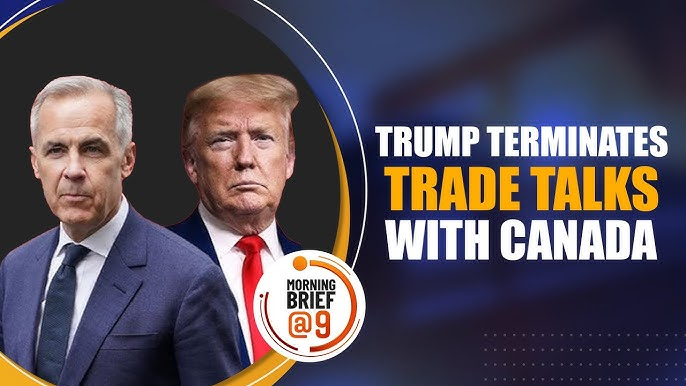
Speaking from the White House on Friday, Trump declared that the “ongoing trade negotiations with Canada are suspended indefinitely until these foreign interference tactics stop.” He went on to accuse Prime Minister Justin Trudeau’s administration of “crossing a line” by “trying to manipulate the American judicial process.”
“We will not allow any country, even a friendly one, to meddle with the decisions of the United States Supreme Court,” Trump said. “America decides its own laws, not foreign governments.”Canada Denies Allegations and Calls for Calm
In response, the Canadian government swiftly rejected the allegations, calling them “baseless and politically motivated.” Deputy Prime Minister Chrystia Freeland stated that Canada “respects the independence of the U.S. judiciary” and “has not and would never interfere in another nation’s judicial process.”
Freeland emphasized that the ad campaign in question was funded by Canadian trade associations, not the government, and that it aimed to highlight the economic consequences of U.S. tariffs on North American businesses.
“This is a misunderstanding that risks undermining decades of close partnership,” she said in a press briefing in Ottawa. “Our economies are deeply interconnected, and escalating rhetoric helps no one.”Trade Talks Frozen as Uncertainty Mounts
The accusations come at a sensitive time for both nations, which have been negotiating updates to the North American Trade Framework, a post-USMCA (United States–Mexico–Canada Agreement) initiative designed to strengthen energy and supply-chain cooperation.
Trump’s decision to halt the talks immediately triggered volatility in currency and commodities markets. The Canadian dollar fell slightly against the U.S. dollar, while aluminum futures saw a short-term spike amid fears of renewed trade barriers.
Trade experts warn that the move could have serious repercussions for industries on both sides of the border.
“Pausing these negotiations will hurt U.S. manufacturers as much as Canadian exporters,” said Dr. Lisa Hanford, a trade analyst at Georgetown University. “Both economies rely on integrated supply chains, especially in the auto and energy sectors.”
Political and Legal Implications
Trump’s accusation also raises complex questions about foreign influence, judicial independence, and political strategy as the U.S. enters another heated election cycle. Critics argue that the president is using the Supreme Court controversy to rally support among his base, which has long favored his protectionist trade policies.
Some legal scholars, however, warn that the situation could set a dangerous precedent if international disputes begin to entangle the U.S. judiciary.
“Accusing a foreign ally of judicial interference is an extraordinary step,” said constitutional law expert Dr. Rafael Miller. “If substantiated, it would represent a significant breach of diplomatic norms—but if not, it could undermine U.S. credibility abroad.”
A Growing Rift Between Allies
The latest rift follows months of strain over environmental regulations, cross-border energy exports, and defense spending commitments within NATO. Although both governments have insisted that their alliance remains strong, Friday’s confrontation highlights the fragile balance between cooperation and confrontation in modern geopolitics.
As of Friday evening, there were no signs of de-escalation. The White House indicated that trade discussions will remain suspended “until further notice,” while Canada has called for “direct diplomatic dialogue” to clarify the facts and restore trust.
For now, one thing is clear: a once-stable partnership between two of the world’s most integrated economies is entering one of its most uncertain chapters in recent history.
SPANISH VERSION
Titular:
Trump acusa a Canadá de interferir en la Corte Suprema de EE. UU. en medio de una disputa comercial por aranceles
Por POLITICA NEWS TODAY | 24 de octubre de 2025
En un nuevo giro en las tensas relaciones entre Estados Unidos y Canadá, el presidente Donald Trump acusó al gobierno canadiense de intentar influir en la Corte Suprema de EE. UU. mediante una “campaña publicitaria antiarancelaria”. Las declaraciones han desatado una tormenta diplomática y económica, marcando uno de los momentos más tensos entre ambos aliados en los últimos años.
De acuerdo con informes de The Guardian, Trump afirmó que el gobierno canadiense habría financiado o respaldado indirectamente una serie de anuncios en medios estadounidenses y plataformas digitales que calificaban los nuevos aranceles impuestos por Washington como “dañinos para la economía” y “legalmente cuestionables”.
Desde la Casa Blanca, el mandatario anunció la suspensión indefinida de las negociaciones comerciales con Ottawa, acusando al primer ministro Justin Trudeau de “cruzar una línea” al “intentar manipular el proceso judicial estadounidense”.
“No permitiremos que ningún país, ni siquiera un aliado, interfiera en las decisiones de la Corte Suprema de Estados Unidos”, declaró Trump. “América dicta sus propias leyes, no los gobiernos extranjeros.”
Canadá niega las acusaciones y llama a la calma
El gobierno canadiense respondió de inmediato, calificando las acusaciones de “infundadas y motivadas políticamente”. La vice primera ministra Chrystia Freeland aseguró que Canadá “respeta la independencia del poder judicial estadounidense” y que “jamás interferiría en los asuntos internos de otro país”.
Freeland aclaró que la campaña publicitaria en cuestión fue financiada por asociaciones comerciales privadas, no por el Estado, y que su propósito era únicamente destacar los efectos económicos de los aranceles sobre las cadenas productivas de América del Norte.
“Se trata de un malentendido que puede poner en riesgo décadas de cooperación estrecha”, señaló Freeland. “Nuestras economías están profundamente integradas, y la escalada retórica no beneficia a nadie.”
Negociaciones congeladas y mercados en tensión
Las acusaciones llegan en un momento crucial, cuando ambos países buscaban modernizar el Marco de Comercio de América del Norte, sucesor del acuerdo T-MEC. Sin embargo, tras el anuncio de Trump, las conversaciones quedaron paralizadas y los mercados reaccionaron con nerviosismo.
El dólar canadiense cayó levemente frente al dólar estadounidense, mientras que los futuros del aluminio subieron por temor a nuevas restricciones comerciales.
Expertos advirtieron que la decisión podría tener consecuencias graves para ambos lados de la frontera.
“Suspender las negociaciones perjudica tanto a los fabricantes estadounidenses como a los exportadores canadienses”, explicó Lisa Hanford, analista de comercio internacional en la Universidad de Georgetown. “Las dos economías dependen de cadenas de suministro compartidas, especialmente en los sectores automotriz y energético.”
⚖️ Implicaciones políticas y legales
Las acusaciones también abren un nuevo frente de debate sobre la influencia extranjera, la independencia judicial y las estrategias políticas en un año preelectoral en Estados Unidos.
Analistas sugieren que Trump podría estar utilizando el conflicto con Canadá para reforzar su imagen nacionalista y recuperar apoyo entre sus votantes más conservadores.
Sin embargo, juristas advierten sobre el riesgo de que este tipo de denuncias deterioren la confianza diplomática.
“Acusar a un aliado de interferencia judicial es un paso sin precedentes”, explicó el constitucionalista Rafael Miller. “Si se comprobara, sería una violación grave de las normas internacionales; si no, podría dañar seriamente la credibilidad de EE. UU.”
Una grieta creciente entre aliados
Esta crisis se suma a meses de fricciones bilaterales por temas ambientales, exportaciones energéticas y compromisos de defensa dentro de la OTAN. Aunque ambos gobiernos insisten en que su alianza sigue firme, los últimos acontecimientos revelan la fragilidad del equilibrio diplomático en América del Norte.
Por ahora, la Casa Blanca mantiene congeladas las conversaciones comerciales “hasta nuevo aviso”, mientras que Canadá ha pedido una reunión directa para “restablecer la confianza y aclarar los hechos.”
Lo que está claro es que la relación entre dos de las economías más integradas del mundo atraviesa una de sus etapas más inciertas en los últimos tiempos.