



“Under the Watchful Drone: How the U.S.-Led Monitoring Hub Is Holding the Israel-Gaza Ceasefire Together”
A newly established coordination center in southern Israel is playing a crucial role in maintaining the fragile ceasefire between Israel and Gaza, as international partners intensify surveillance, diplomacy, and humanitarian efforts to prevent renewed violence.
Surveillance takes to the skies
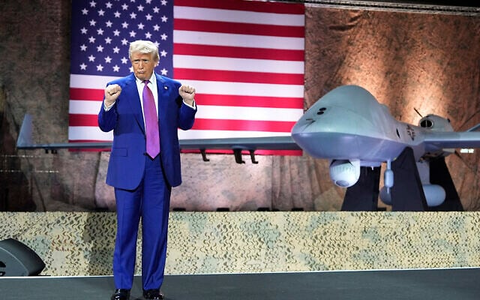
In recent days, the Gaza Strip has become the focus of high-tech surveillance flights operated by U.S. military drones, deployed with Israel’s consent. These drones are tasked with verifying compliance with the ceasefire, monitoring militant movements, and supporting intelligence-sharing among allied nations. The drone data is transmitted to the newly created Civil-Military Coordination Center (CMCC) near Kiryat Gat, southern Israel, where U.S., Israeli, and international staff collaborate to monitor security and humanitarian developments.
International support and strategic complexity
The CMCC is staffed primarily by personnel from the U.S. Central Command (CENTCOM) and includes support from nations such as Australia, France, Spain, and the United Arab Emirates. Their mission is to strengthen the ceasefire through independent monitoring and rapid-response mechanisms. U.S. officials said that recent intelligence sharing through the center helped prevent a potential militant attack—an early indication that the system is already proving effective.
Fragile peace under strain
Although the ceasefire remains formally in place, tensions persist. Israeli forces recently carried out what they described as a “targeted strike” in central Gaza, aimed at a senior militant operative. The incident highlights how delicate the current truce remains.
Inside Gaza, civilians continue to face severe risks despite the reduction in active fighting. In one tragic incident, a pair of six-year-old twins were critically injured when unexploded ordnance detonated while they were playing. The episode underscored how remnants of war continue to endanger lives even after the guns fall silent.
Why the monitoring hub matters
The CMCC fulfills three vital roles:
- Accountability: By collecting data from drones, satellites, and ground reports, the center helps detect violations quickly, discouraging both sides from resuming hostilities.
- Humanitarian coordination: The hub plays a key logistical role in managing aid convoys, ensuring that food, water, and medicine reach Gaza through safe routes, and liaising between Israel, aid agencies, and local authorities.
- Reconstruction diplomacy: Beyond immediate security, the center supports ongoing discussions about Gaza’s long-term rebuilding and governance under international supervision.
This model, blending technology and diplomacy, represents a new approach to conflict management in the region.
The road ahead: challenges and hope
Experts caution that the ceasefire remains fragile and heavily dependent on sustained international oversight. Israel continues to demand the full disarmament of Hamas, while Hamas maintains its control over Gaza and resists outside intervention. Both sides remain distrustful, and any incident—intentional or accidental—could unravel the delicate balance.
Analysts say the success of the U.S.-led monitoring initiative will depend on transparency, consistency, and trust. It must provide credible, verifiable data and ensure that humanitarian aid flows smoothly while deterring further aggression.
A cautious optimism
For now, the CMCC represents a small but meaningful step toward stabilizing one of the world’s most volatile regions. The drones hovering above Gaza and the diplomats stationed at the coordination hub symbolize a fragile yet functional peace process—one that depends as much on technology and vigilance as it does on political will and human compassion.
If it holds, this model of real-time monitoring and multilateral cooperation could serve as a blueprint for future ceasefire management in conflict zones worldwide. But if it fails, it could remind the world just how easily hope can be grounded by history’s recurring violence.
Titular: “Bajo la Mirada de los Drones: Cómo el Centro Internacional Mantiene Vivo el Alto el Fuego entre Israel y Gaza”
Un nuevo centro de coordinación establecido en el sur de Israel está desempeñando un papel crucial para mantener el frágil alto el fuego entre Israel y Gaza, mientras socios internacionales refuerzan la vigilancia, la diplomacia y los esfuerzos humanitarios para evitar una nueva escalada del conflicto.
La vigilancia se eleva al cielo
En los últimos días, la Franja de Gaza se ha convertido en el foco de vuelos de vigilancia de alta tecnología operados por drones militares estadounidenses, desplegados con el consentimiento de Israel. Estos drones tienen la misión de verificar el cumplimiento del alto el fuego, monitorear movimientos de grupos armados y apoyar el intercambio de inteligencia entre naciones aliadas.
Los datos recolectados son transmitidos al recién creado Centro de Coordinación Civil-Militar (CMCC), ubicado cerca de Kiryat Gat, en el sur de Israel, donde personal estadounidense, israelí e internacional colabora para supervisar tanto la seguridad como la situación humanitaria.
Apoyo internacional y complejidad estratégica
El CMCC está conformado principalmente por personal del Comando Central de Estados Unidos (CENTCOM), con el apoyo de países como Australia, Francia, España y Emiratos Árabes Unidos. Su misión es fortalecer el alto el fuego mediante un monitoreo independiente y mecanismos de respuesta rápida.
Según funcionarios estadounidenses, el intercambio de inteligencia a través del centro ya permitió prevenir un posible ataque militante, una señal temprana de que el sistema está dando resultados.
Una paz frágil bajo presión
Aunque el alto el fuego se mantiene oficialmente, las tensiones persisten. Las fuerzas israelíes llevaron a cabo recientemente lo que describieron como un “ataque selectivo” en el centro de Gaza, dirigido contra un operativo de alto rango de un grupo armado. El incidente evidencia lo delicada que sigue siendo la tregua.
Dentro de Gaza, los civiles continúan en riesgo a pesar de la reducción de los combates. En un trágico suceso, unos gemelos de seis años resultaron gravemente heridos tras la detonación de un artefacto sin explotar mientras jugaban. El hecho resalta cómo los restos de guerra siguen cobrando vidas incluso después del silencio de las armas.
Por qué es importante el centro de monitoreo
El CMCC cumple tres funciones clave:
- Responsabilidad: Al recopilar datos de drones, satélites e informes en tierra, el centro puede detectar violaciones rápidamente, desalentando a ambas partes de reanudar las hostilidades.
- Coordinación humanitaria: El centro gestiona la logística de los convoyes de ayuda, garantizando que alimentos, agua y medicinas lleguen a Gaza a través de rutas seguras, coordinando con Israel, agencias de ayuda y autoridades locales.
- Diplomacia de reconstrucción: Además de la seguridad inmediata, el centro respalda las conversaciones sobre la reconstrucción y la gobernanza a largo plazo de Gaza bajo supervisión internacional.
Este modelo, que combina tecnología y diplomacia, representa un nuevo enfoque para la gestión de conflictos en la región.
Desafíos y esperanza
Expertos advierten que el alto el fuego sigue siendo frágil y depende de una supervisión internacional sostenida. Israel exige el desarme total de Hamás, mientras que el grupo mantiene su control sobre Gaza y rechaza la intervención extranjera. Cualquier incidente —intencionado o accidental— podría desestabilizar el equilibrio actual.
El éxito de esta iniciativa liderada por Estados Unidos dependerá de la transparencia, la constancia y la confianza. El sistema deberá ofrecer datos verificables y garantizar el flujo continuo de ayuda humanitaria, al tiempo que disuade nuevas agresiones.
Un optimismo cauteloso
Por ahora, el CMCC representa un pequeño pero significativo paso hacia la estabilidad en una de las regiones más volátiles del mundo. Los drones que sobrevuelan Gaza y los diplomáticos en el centro simbolizan un proceso de paz frágil pero funcional, que depende tanto de la tecnología y la vigilancia como de la voluntad política y la compasión humana.
Si el alto el fuego se mantiene, este modelo de monitoreo en tiempo real y cooperación multilateral podría convertirse en un referente para la gestión de treguas en otros conflictos del mundo. Pero si fracasa, recordará al mundo lo fácil que es que la esperanza se derrumbe ante el peso de la historia.


