THE SILENT BLOCKADE: ECUADOR’S GOVERNMENT ABANDONS THE TABLE AS CONAIE CRIES REPRESSION
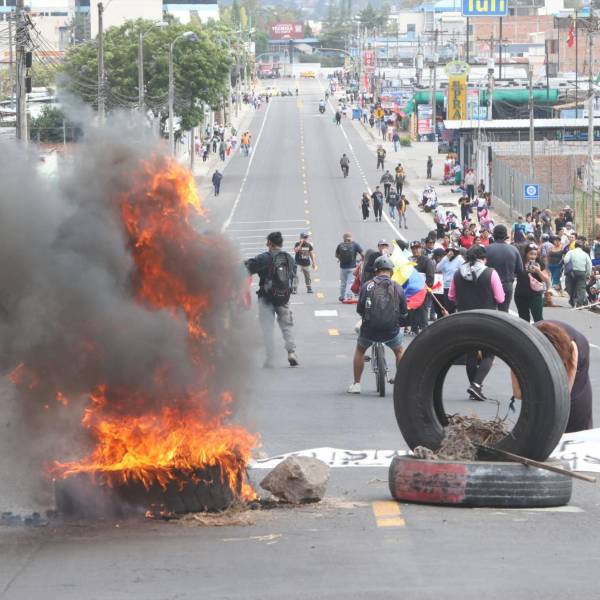
THE HIGHLANDS OF ECUADOR are enveloped in a tension thicker than the Andean fog, a political miasma that settled deep on Monday, October 20, 2025. The air, already heavy with the smoke of blockades and the chilling certainty of protracted conflict, turned cold with the absolute finality of the Confederation of Indigenous Nationalities of Ecuador (CONAIE)’s decree: the door to dialogue is sealed shut. This was not a mere negotiation tactic, but a devastating indictment of a government choosing the path of confrontation over genuine conciliation—a choice with profound and escalating consequences for the nation.
The chronicle of this profound deadlock finds its source in the Presidential Palace, where the administration of Daniel Noboa formally renounced the planned negotiation tables with the indigenous movement. The words of Interior Minister John Reimberg served as the final, metallic click of the lock, signaling the end of the brief and fragile truce: “Dialogue is closed. From now on, anything that happens will be their responsibility,” he declared, effectively throwing the fate of the country onto the shoulders of the protestors. This statement, intended to absolve the State, was immediately seized by CONAIE as irrefutable proof of an authoritarian intent and a refusal to acknowledge the roots of the crisis.
For the indigenous movement, any semblance of a bridge to peace has been systematically burned by the State’s own actions. Their powerful communiqué detailed a litany of grievances that they argue preclude any real conversation. They speak, first, of Increased Repression, a chilling accounting of mounting injuries, detentions, and the persistent violation of human rights on the frontlines of the strike. They rigorously document the campaign to silence their institutional voice: the closure of community media outlets, the financially crippling freeze on organizational bank accounts, illegal raids, and the constant threat of arbitrary investigations—all designed to dismantle the social fabric of the resistance.
More acutely, CONAIE protests the insidious Criminalization of their struggle. The terrifying specter of terrorism has been deployed against them, a rhetorical weapon aimed at discrediting a legitimate popular protest. The continued plight of the “12 of Otavalo,” held as political prisoners, stands as a bitter, living symbol that the government fundamentally confuses a genuine demand for justice with a mere criminal threat to public order.
At the heart of the standoff lies a profound ideological fissure. CONAIE accuses President Noboa of serving the financial overlords—the International Monetary Fund (FMI)—by rigidly enforcing demands that inevitably deepen the suffering and poverty of the common people. The indigenous leadership has declared their unwavering will for a true dialogue, but they firmly assert they will not participate in “empty conversations nor those conditioned by repression.” With the government refusing to listen and the movement refusing to yield, the paralyzing National Strike becomes the only stage left for this protracted drama, its economic and social costs mounting with every passing, silent day.
CERRADO EL DIÁLOGO: LA CONAIE ASEGURA QUE NO HAY CONDICIONES PARA NEGOCIAR POR REPRESIÓN GUBERNAMENTAL
LAS TIERRAS ALTAS DE ECUADOR están envueltas en una tensión más densa que la niebla andina, un miasma político que se asentó profundamente el lunes 20 de octubre de 2025. El aire, ya cargado con el humo de los bloqueos y la certeza escalofriante de un conflicto prolongado, se enfrió con la certeza absoluta de la orden de la Confederación de Nacionalidades Indígenas del Ecuador (CONAIE): la puerta al diálogo está sellada. Esto no fue una simple táctica de negociación; fue una acusación devastadora contra un gobierno que elige la senda de la confrontación sobre la genuina conciliación—una elección con consecuencias profundas y crecientes para la nación.
La crónica de este profundo estancamiento tiene su origen en el Palacio Presidencial, donde la administración de Daniel Noboa renunció formalmente a las mesas de negociación previstas con el movimiento indígena. Las palabras del Ministro del Interior, John Reimberg, sirvieron como el click metálico final del candado, señalando el fin de la frágil y breve tregua: “Se cierra el diálogo. A partir de ahora, cualquier cosa que pase será responsabilidad de ellos,” declaró, trasladando efectivamente el destino del país a los hombros de los manifestantes. Esta declaración, destinada a absolver al Estado, fue inmediatamente interpretada por la CONAIE como prueba irrefutable de una intención autoritaria y una negativa a reconocer las raíces de la crisis.
Para el movimiento indígena, cualquier atisbo de puente hacia la paz ha sido sistemáticamente quemado por las propias acciones del Estado. Su contundente comunicado detalla una letanía de agravios que, según argumentan, impiden cualquier conversación real. Hablan, en primer lugar, del Aumento de la Represión, un escalofriante recuento de heridos, detenidos y la violación persistente de los derechos humanos en las líneas del paro. Documentan rigurosamente la campaña para silenciar su voz institucional: el cierre de medios de comunicación comunitarios, el bloqueo financieramente paralizante de cuentas bancarias de organizaciones, allanamientos ilegales y la amenaza constante de investigaciones arbitrarias—todo diseñado para desmantelar el tejido social de la resistencia.
De manera más punzante, la CONAIE protesta por la insidiosa Criminalización de su lucha. El aterrador espectro del terrorismo ha sido desplegado contra ellos, un arma retórica destinada a desacreditar una protesta popular legítima. La difícil situación continuada de los “12 de Otavalo,” retenidos como prisioneros políticos, se erige como un amargo símbolo vivo de que el gobierno confunde fundamentalmente una demanda genuina de justicia con una mera amenaza criminal al orden público.
En el centro del enfrentamiento reside una profunda fisura ideológica. La CONAIE acusa al Presidente Noboa de servir a los señores financieros—el Fondo Monetario Internacional (FMI)—al imponer rígidamente exigencias que inevitablemente profundizan el sufrimiento y la pobreza del pueblo. La dirigencia indígena ha declarado su voluntad inquebrantable por un diálogo verdadero, pero afirma rotundamente que no participará en “conversaciones vacías ni condicionadas por la represión.” Con el gobierno negándose a escuchar y el movimiento negándose a ceder, el paralizante Paro Nacional se convierte en el único escenario restante para este drama prolongado, con sus costos económicos y sociales aumentando con cada día que transcurre en silencio.