Atentado Contra Activistas Venezolanos en Bogotá Despierta Alarmas por Represión Transnacional
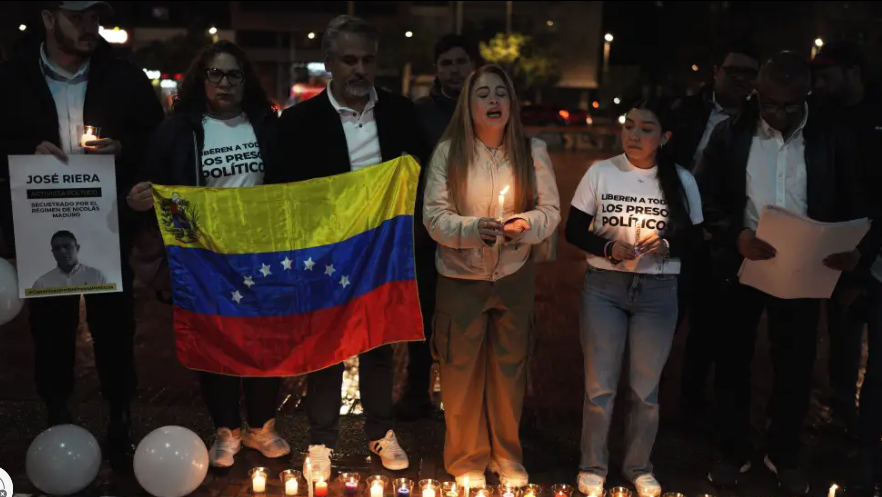
Bogotá Shooting of Venezuelan Dissidents Sparks Fears of Transnational Repression
Human rights organizations and political observers are raising serious concerns after the October 14 targeted shooting of two Venezuelan opposition activists in Bogotá, Colombia — an incident many believe to be politically motivated.
The victims, identified as Yendri Velásquez and Luis Peche Arteaga, were both prominent Venezuelan activists known for their opposition to President Nicolás Maduro’s government. According to Colombian authorities, both men were shot multiple times while leaving a community meeting in the north of Bogotá. They remain hospitalized in critical condition.
Local police confirmed that the attack was carried out by two unidentified gunmen on motorcycles — a method often associated with political or criminal contract killings in the region. Investigators have not ruled out political motives and are working with Colombia’s intelligence agency to determine whether the assault was orchestrated by Venezuelan operatives or allies acting abroad.
Transnational repression concerns
Human rights advocates, including Amnesty International and Human Rights Watch, have described the incident as part of a disturbing trend of “transnational repression” — where authoritarian regimes pursue or intimidate exiled dissidents overseas.
“This is not an isolated case,” said José Miguel Vivanco, a regional expert on Latin American democracy. “It’s part of a systematic pattern in which the Maduro regime seeks to silence critics even outside Venezuela’s borders.”
Venezuelan exiles in Colombia, which hosts more than 2.8 million Venezuelan migrants, say the atmosphere has grown increasingly tense. Activists have reported surveillance, threats, and harassment in recent months.
Colombian Foreign Minister Luis Gilberto Murillo condemned the attack, calling it “an unacceptable act of political violence that violates our sovereignty and humanitarian principles.” He confirmed that Colombian security agencies are in close contact with the Venezuelan opposition-in-exile to strengthen protection protocols.
Regional implications
The attack comes at a critical time for regional diplomacy. Colombia has recently sought to mediate dialogue between the Venezuelan opposition and Maduro’s government, but the assault could complicate those efforts.
Analysts warn that if evidence links the attack to Caracas, bilateral relations may deteriorate sharply — undermining Colombia’s position as a key humanitarian host and regional negotiator.
“This event exposes the vulnerability of exiled dissidents and the limits of international protection mechanisms,” said analyst Cynthia Arnson of the Wilson Center. “It also underscores how political conflicts inside Venezuela continue to spill across borders.”
International reaction
The United Nations Office for Human Rights has requested an independent investigation, and the Organization of American States (OAS) has called on Bogotá to ensure justice “without political interference.”
So far, the Venezuelan government has not commented publicly on the attack.
References:
- AP News – “Hit-style shooting of Venezuelan activists in Colombia fuels fear of wider persecution by Maduro”
- BBC Mundo – Reportes sobre ataques a disidentes venezolanos en el exterior (archived)
- Human Rights Watch – Reports on transnational repression in Latin America
Versión en Español
Atentado Contra Activistas Venezolanos en Bogotá Despierta Alarmas por Represión Transnacional
Graves preocupaciones se han desatado en Colombia y la región luego del ataque armado del 14 de octubre contra dos activistas venezolanos opositores en Bogotá, considerado por expertos como un posible acto de represión política internacional.
Las víctimas, Yendri Velásquez y Luis Peche Arteaga, son conocidos militantes en el exilio que han denunciado al gobierno de Nicolás Maduro. Según las autoridades, fueron baleados por dos hombres en motocicleta cuando salían de una reunión comunitaria. Ambos permanecen en estado crítico.
Las primeras investigaciones apuntan a un ataque premeditado, ejecutado con “alto grado de planificación”. Las autoridades colombianas investigan la posible participación de redes vinculadas al chavismo o de grupos que actúan bajo su influencia en el exterior.
Preocupación internacional
Organizaciones como Amnistía Internacional y Human Rights Watch señalaron que el atentado encaja en un patrón de represión transnacional.
“Estamos viendo cómo los regímenes autoritarios intentan acallar voces críticas más allá de sus fronteras,” declaró José Miguel Vivanco, especialista en derechos humanos.
El canciller colombiano Luis Gilberto Murillo calificó el hecho como “una agresión que no solo afecta a las víctimas, sino a la soberanía colombiana”. El gobierno prometió reforzar la protección a líderes exiliados y coordinar una investigación con organismos internacionales.
Impacto regional
El atentado ocurre mientras Colombia intenta mantener un papel de mediador entre el chavismo y la oposición venezolana. Si se confirma la implicación de agentes vinculados a Caracas, el episodio podría agravar las tensiones diplomáticas.
La OEA y la ONU exigieron una investigación imparcial y el castigo de los responsables. Hasta el momento, el régimen de Maduro no ha emitido comentarios.