EL APOCALIPSIS DEL ESMOG: NUEVA DELHI AMANECE BAJO UNA CORONA DE VENENO
THE SMOG APOCALYPSE: NEW DELHI WAKES TO A CROWN OF POISON
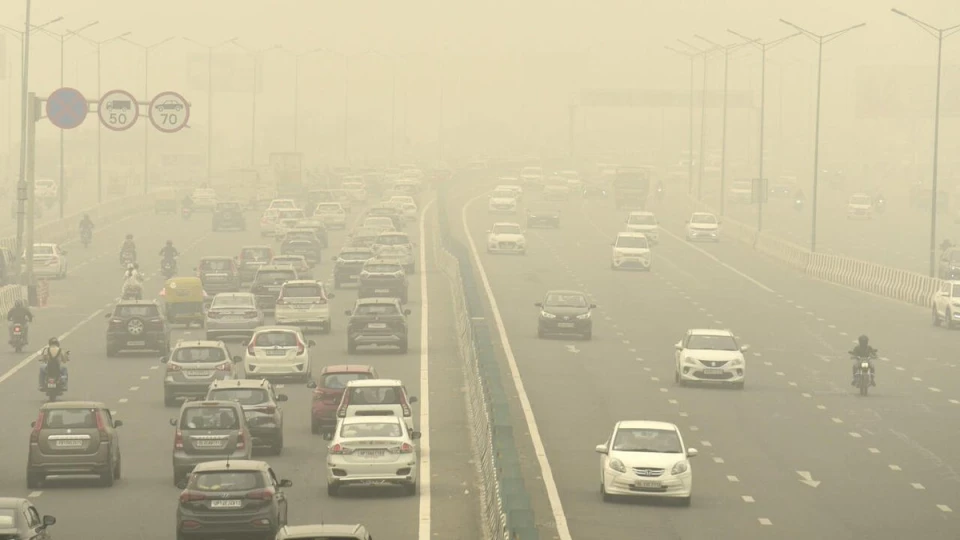
THE CHRONICLE OF URBAN DECAY acquired a new, chilling chapter on the morning of Monday, October 20, 2025, as the sprawling metropolis of New Delhi, India, awoke beneath a shroud of malignant, dense smog. The capital’s houses, towers, and streets were not merely foggy; they were entombed in a toxic haze, marking a crisis that transcended mere weather inconvenience and became a profound threat to life itself. The air pollution levels recorded were devastatingly high, soaring to more than twelve times the maximum safe limit recommended by the World Health Organization (WHO).
The enemy in the air is invisible but lethal: a dangerously high concentration of PM 2.5. This acronym refers to micro-carcinogenic particles, so minute that they bypass the body’s defenses, penetrating deep into the lungs and the cardiovascular system, ultimately entering the bloodstream. Environmental monitoring systems across the city registered particle levels reaching 248 micrograms per cubic meter in some sectors. In other, more acutely affected zones, the concentration catastrophically exceeded 300 points, a threshold globally recognized as acutely dangerous.
To contextualize the public health catastrophe, a Swiss monitoring platform issued a grim, sobering comparison: breathing air at that level of toxicity is equivalent to the damage caused by smoking more than 20 cigarettes per day. This means that simply existing within New Delhi’s borders on that morning was an act of involuntary, mass self-poisoning. The air, which should sustain life, had become the city’s silent, pervasive assailant.
This crisis confirmed New Delhi’s undisputed and tragic reign at the top of a morbid international league table. According to official data, the Indian capital occupies the unenviable first place on the list of the world’s most polluted cities, followed closely by Lahore and Karachi in Pakistan, and its fellow Indian metropolises, Bombay and Calcutta. The dense, toxic cloud serves as a harrowing visual metaphor for a global environmental failure, illustrating a systemic breakdown where economic ambition has catastrophically outpaced ecological responsibility. The sun may have risen over New Delhi, but its light struggled to pierce the dense, carcinogenic mantle now strangling the heart of the subcontinent.
LA CRÓNICA DEL DETERIORO URBANO adquirió un nuevo y escalofriante capítulo la mañana del lunes 20 de octubre de 2025, cuando la extensa metrópolis de Nueva Delhi, India, despertó bajo un sudario de esmog denso y maligno. Las casas, torres y calles de la capital no estaban simplemente brumosas; estaban sepultadas en una neblina tóxica, marcando una crisis que trascendió la mera inconveniencia climática para convertirse en una profunda amenaza a la vida misma. Los niveles de contaminación del aire registrados fueron devastadoramente altos, superando doce veces el límite máximo de seguridad recomendado por la Organización Mundial de la Salud (OMS).
El enemigo en el aire es invisible pero letal: una concentración peligrosamente alta de PM 2.5. Esta sigla se refiere a micropartículas cancerígenas, tan minúsculas que evaden las defensas del cuerpo, penetrando profundamente en los pulmones y el sistema cardiovascular, e ingresando finalmente al torrente sanguíneo. Los sistemas de monitoreo ambiental en toda la ciudad registraron niveles de partículas que alcanzaron los 248 microgramos por metro cúbico en algunos sectores. En otras zonas más agudamente afectadas, la concentración superó catastróficamente los 300 puntos, un umbral reconocido mundialmente como agudamente peligroso.
Para contextualizar la catástrofe de salud pública, una plataforma suiza de monitoreo emitió una comparación sombría y aleccionadora: respirar aire a ese nivel de toxicidad equivale al daño causado por fumar más de 20 cigarrillos al día. Esto significa que simplemente existir dentro de las fronteras de Nueva Delhi esa mañana fue un acto de autointoxicación masiva e involuntaria. El aire, que debería sostener la vida, se había convertido en el agresor silencioso y omnipresente de la ciudad.
Esta crisis confirmó el reinado indiscutible y trágico de Nueva Delhi en la cima de una mórbida tabla de clasificación internacional. Según datos oficiales, la capital india ocupa el poco envidiable primer lugar en la lista de las ciudades más contaminadas del mundo, seguida de cerca por Lahore y Karachi en Pakistán, y sus compañeras metrópolis indias, Bombay y Calcuta. La densa nube tóxica sirve como una desgarradora metáfora visual de un fracaso ambiental global, ilustrando un colapso sistémico donde la ambición económica ha superado catastróficamente la responsabilidad ecológica. Puede que el sol haya salido sobre Nueva Delhi, pero su luz luchó por penetrar el denso manto cancerígeno que ahora estrangula el corazón del subcontinente.