GAZA’S CEASEFIRE PARADOX: HUMANITARIAN CRISIS WORSENS AMID US-UN CLASH OVER AID ACCESS AND TECHNOCRAT GOVERNANCE
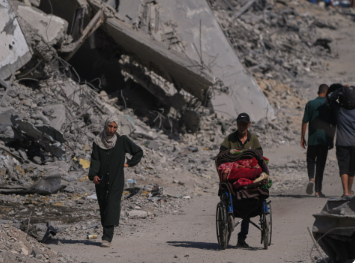
Despite a US-brokered ceasefire taking effect earlier this month, the humanitarian catastrophe in the Gaza Strip remains “unchanged,” according to local civil defense officials, as the United Nations and aid agencies intensify calls for Israel to allow unimpeded access for critical supplies.
The UN’s International Organization for Migration (IOM) paints a dire picture: approximately 90 percent of Gaza’s population is displaced, with at least 1.5 million people in desperate need of emergency shelter. IOM has 28,000 tents and other essential items waiting in Jordan, but these vital resources are being blocked by what aid groups describe as Israel’s continued restrictions on aid delivery. Compounding this, UNICEF’s regional director has voiced fears of a “lost generation,” noting that two years of grueling conflict have shattered the education system, leaving children wandering among ruins with minimal access to formal learning.
The UNRWA-US Diplomatic Rift
The delivery crisis is exacerbated by a high-stakes diplomatic confrontation over the future of the largest aid provider in the enclave: the UN agency for Palestinian refugees, UNRWA.
Top US diplomat Marco Rubio publicly stated that Washington would not allow UNRWA to play any role in future aid delivery in Gaza, dismissing the agency due to uncorroborated Israeli claims of ties to Hamas. This position directly contradicts a ruling by the International Court of Justice (ICJ), which ordered Israel to permit UN agencies, including UNRWA, to carry out humanitarian work.
The UN quickly defended its agency. Farhan Haq, a deputy spokesperson for the UN Secretary-General, forcefully rejected the US claims, asserting that “UNRWA is the backbone of our humanitarian operations in Gaza.” He noted that the ICJ and multiple independent committees have exonerated the agency and that the small number of personnel credibly linked to Hamas were immediately fired. The controversy means thousands of tons of aid—including UNRWA’s own stockpile of supplies—remain waiting at the border crossings.
Political Agreements and Continued Violence
In a significant political development, Palestinian factions, including Hamas, met in Cairo and agreed on several key steps for the post-war governance of the Strip. They emphasized the need for national unity, the rejection of displacement, and an agreement to hand over the administration of Gaza to a temporary committee composed of independent “technocrats.” They also called for the lifting of the blockade and the establishment of an international committee to oversee reconstruction.
Despite the ceasefire, violence continues to flare. Israeli forces were reported to have killed two people in shelling east of Deir el-Balah in central Gaza, and clashes erupted in the occupied West Bank cities of Tubas and Beit Ummar. Furthermore, Israel confirmed an attack in southern Lebanon, claiming to have targeted an alleged Hezbollah member. These actions underscore the fragile nature of the ceasefire and the continued security instability across the region.
PARADOJA DEL ALTO EL FUEGO EN GAZA: LA CRISIS HUMANITARIA EMPEORA EN MEDIO DEL CHOQUE ENTRE EE. UU. Y LA ONU POR LA AYUDA
A pesar de que un alto el fuego negociado por Estados Unidos entró en vigor a principios de este mes, la catástrofe humanitaria en la Franja de Gaza permanece “sin cambios,” según funcionarios de defensa civil locales, mientras las Naciones Unidas y las agencias de ayuda intensifican sus llamamientos a Israel para que permita el acceso sin restricciones de suministros esenciales.
La Organización Internacional para las Migraciones (OIM) de la ONU pinta un panorama desolador: aproximadamente el 90 por ciento de la población de Gaza está desplazada, con al menos 1.5 millones de personas en necesidad desesperada de asistencia de refugio de emergencia. La OIM tiene 28,000 tiendas de campaña y otros artículos esenciales esperando en Jordania, pero estos recursos vitales están siendo bloqueados por lo que los grupos de ayuda describen como las continuas restricciones de Israel a la entrega de ayuda. Agravando esto, el director regional de UNICEF ha expresado temores de una “generación perdida,” señalando que dos años de agotador conflicto han destrozado el sistema educativo, dejando a los niños vagando entre ruinas con un acceso mínimo a la educación formal.
La Brecha Diplomática entre la UNRWA y EE. UU.
La crisis de entrega de ayuda se ve exacerbada por una confrontación diplomática de alto riesgo sobre el futuro del mayor proveedor de ayuda en el enclave: la agencia de la ONU para los refugiados palestinos, la UNRWA.
El principal diplomático estadounidense, Marco Rubio, declaró públicamente que Washington no permitiría que la UNRWA desempeñe ningún papel en la futura entrega de ayuda en Gaza, desestimando a la agencia debido a afirmaciones israelíes no corroboradas de vínculos con Hamás. Esta postura contradice directamente un fallo de la Corte Internacional de Justicia (CIJ), que ordenó a Israel permitir que las agencias de la ONU, incluida la UNRWA, lleven a cabo trabajo humanitario.
La ONU defendió rápidamente a su agencia. Farhan Haq, portavoz adjunto del Secretario General de la ONU, rechazó enérgicamente las afirmaciones de EE. UU., asegurando que “la UNRWA es la columna vertebral de nuestras operaciones humanitarias en Gaza.” Señaló que la CIJ y múltiples comités independientes han exonerado a la agencia y que el pequeño número de personal creíblemente vinculado a Hamás fue despedido de inmediato. La controversia significa que miles de toneladas de ayuda—incluidas las propias reservas de suministros de la UNRWA—permanecen a la espera en los cruces fronterizos.
Acuerdos Políticos y Violencia Continua
En un desarrollo político significativo, las facciones palestinas, incluido Hamás, se reunieron en El Cairo y acordaron varios pasos clave para la gobernanza de la Franja después de la guerra. Enfatizaron la necesidad de unidad nacional, el rechazo al desplazamiento y el acuerdo para entregar la administración de Gaza a un comité temporal compuesto por “tecnócratas” independientes. También pidieron el levantamiento del bloqueo y el establecimiento de un comité internacional para supervisar la reconstrucción.
A pesar del alto el fuego, la violencia continúa. Se informó que las fuerzas israelíes mataron a dos personas en un bombardeo al este de Deir el-Balah en el centro de Gaza, y estallaron enfrentamientos en las ciudades de Tubas y Beit Ummar en la Cisjordania ocupada. Además, Israel confirmó un ataque en el sur del Líbano, alegando haber atacado a un presunto miembro de Hezbolá. Estas acciones subrayan la naturaleza frágil del alto el fuego y la continua inestabilidad de la seguridad en toda la región.