La agitada historia de la Union Jack: símbolo británico entre orgullo y controversia
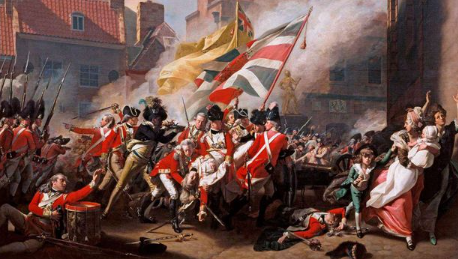
La Union Jack, bandera del Reino Unido, tiene un pasado lleno de transformaciones políticas, simbolismos cambiantes y debates culturales. Lo que hoy muchos ven como un emblema del orgullo nacional, para otros representa exclusión o imposición.
Su origen se remonta a 1606, cuando Jaime I (también Jaime VI de Escocia) mandó combinar la cruz de San Jorge (Inglaterra) con la cruz de San Andrés (Escocia) tras unir las coronas. Esa versión inicial se usaba en barcos y no reemplazaba las banderas separadas en tierra. Con el Acta de Unión de 1707, que formalizó la unión entre Inglaterra y Escocia, la bandera se estabilizó como símbolo conjunto. En 1801, con la incorporación de Irlanda al Reino Unido, se añadió la cruz de San Patricio para representar ese territorio dentro del designio británico.
Desde entonces, el diseño ha sido objeto de revisiones heráldicas: la cruz roja de San Patricio va “contrachangeada” sobre la cruz blanca de San Andrés, con un ligero desplazamiento visual, lo que da a la bandera una orientación correcta (no es simétrica exactamente). Con el paso de los siglos, la Union Jack ha sido utilizada para expresar patrioticismos, identidades imperiales, protestas culturales o conflictos regionales.
Hoy en día, en un Reino Unido marcado por debates sobre identidad, inmigración y nacionalismo, desplegar la Union Jack puede ser un acto político tanto como patriótico. Críticos alertan que algunos usos recientes —por parte de movimientos identitarios o grupos nacionalistas— buscan recuperar símbolos para sus agendas, mientras otros insisten en reivindicar la bandera como un emblema inclusivo que refleja la diversidad de las naciones británicas.
La historia de la Union Jack no es solo la de un pedazo de tela: es el relato de cómo las naciones se unen, divergen y negocian su identidad bajo un mismo símbolo visual.
English
The Turbulent History of the Union Jack: A British Symbol of Pride and Controversy
The Union Jack, the United Kingdom’s flag, carries a tumultuous history full of political transformations, shifting symbolism, and cultural debates. What many regard as a national emblem today is seen by others as exclusionary or imposed.
Its origins date to 1606, when James I (also James VI of Scotland) ordered the combination of the Cross of St. George (England) with the Cross of St. Andrew (Scotland) following the union of the crowns. That initial version was used at sea and did not replace separate flags on land. With the 1707 Act of Union, which formally united England and Scotland, the flag became a consolidated symbol. In 1801, following the inclusion of Ireland into the United Kingdom, the Cross of St. Patrick was added to represent that territory within the British design.
Over the centuries, the design has undergone heraldic refinements: the red cross of St. Patrick is “counterchanged” over the white cross of St. Andrew, with a slight visual offset, making the flag not perfectly symmetrical. Through the ages, the Union Jack has been employed to assert patriotism, imperial identity, cultural protest, or regional conflict.
Today, in a United Kingdom shaped by debates over identity, immigration, and nationalism, flying the Union Jack can be as political as it is patriotic. Critics warn that recent uses—by identity-driven or nationalist movements—seek to reclaim the flag for political agendas, while others defend it as an inclusive emblem reflecting the diversity of Britain’s constituent nations.
The story of the Union Jack is not just about cloth: it is the narrative of how nations unite, diverge, and negotiate identity under a shared visual symbol.