PIEDRAS Y SOSPECHOSOS: SE PROFUNDIZA LA CRISIS POLITICA DE ECUADOR TRAS ATAQUE A LA CARAVANA DE NOBOA
STONES AND SUSPECTS: ECUADOR’S POLITICAL CRISIS DEEPENS AFTER ATTACK ON NOBOA’S MOTORCADES
QUITO, Ecuador—The confrontation between President Daniel Noboa’s administration and the country’s powerful Indigenous movement escalated dramatically this week after the presidential motorcade was violently attacked with rocks in the town of El Tambo, Cañar province. The incident, which left the presidential vehicle visibly damaged, was immediately denounced by the Cabinet as a “clear assassination attempt and an act of terrorism.”
Defense Minister Gian Carlo Loffredo publicly declared the attack’s extreme “level of aggression” as proof of an attempted assassination. Energy Minister Inés Manzano further heightened the stakes, claiming to have seen bullet markings on the vehicles, though this critical detail has yet to be confirmed by investigating authorities. The government’s immediate response was to detain five individuals, who Noboa’s office initially stated would face charges of terrorism and attempted assassination.
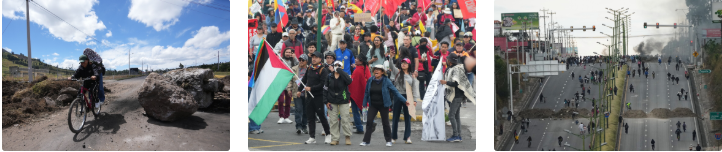
The attack comes amid two weeks of anti-government demonstrations organized by the Confederation of Indigenous Nationalities of Ecuador (CONAIE), which were sparked by the government’s removal of a long-standing fuel subsidy. The price of diesel has since surged from $1.80 to $2.80 per gallon, an economic measure that has historically fueled massive protests, which have typically forced previous administrations to back down. In response to the growing unrest, President Noboa declared a state of emergency across 10 provinces.
However, a swift legal reversal injected a new layer of complexity into the crisis. Late Wednesday, a judge declared the arrest of the five suspects illegal and ordered their immediate release. Ecuador’s Attorney General’s Office stated this decision prevented it from bringing charges. Defense attorney Yaku Pérez, representing the detainees, emphatically stated that “there’s no way to tie” his clients to the attack, declaring that “their innocence has been confirmed.”
For CONAIE, the incident is a provocation by the government itself. The group argued that the motorcade deliberately “entered a place where they knew there were protesters” as a tactic “to justify their war policy” and use force against legitimate demands.
The international community has weighed in, with U.N. Secretary-General António Guterres condemning the violence while calling for an end to all hostilities and an “inclusive dialogue” to resolve differences peacefully. The U.S. State Department echoed the condemnation, standing with authorities to “investigate and ensure accountability.”
The unfolding events underscore the dangerous chasm between the Noboa administration and the Indigenous groups who once supported his rise to power, illustrating a deepening political crisis with no clear path to resolution.
(Spanish) PIEDRAS Y SOSPECHOSOS: SE PROFUNDIZA LA CRISIS POLITICA DE ECUADOR TRAS ATAQUE A LA CARAVANA DE NOBOA
QUITO, Ecuador—El enfrentamiento entre la administración del presidente Daniel Noboa y el influyente movimiento indígena del país escaló dramáticamente esta semana tras el violento ataque con rocas a la caravana presidencial en la localidad de El Tambo, provincia de Cañar. El incidente, que dejó daños visibles en el vehículo del presidente, fue inmediatamente denunciado por el Gabinete como un “claro intento de asesinato y un acto de terrorismo.”
El Ministro de Defensa, Gian Carlo Loffredo, declaró públicamente que el “nivel de agresión” del ataque era prueba de un intento de magnicidio. La Ministra de Energía, Inés Manzano, aumentó aún más la tensión al afirmar haber visto marcas de bala en los vehículos, aunque este detalle crucial aún no ha sido confirmado por las autoridades investigadoras. La respuesta inmediata del gobierno fue detener a cinco personas, a quienes la oficina de Noboa inicialmente anunció que se les procesaría por cargos de terrorismo e intento de asesinato.
El ataque ocurre en medio de dos semanas de manifestaciones antigubernamentales organizadas por la Confederación de Nacionalidades Indígenas del Ecuador (CONAIE), que se desencadenaron por la eliminación de un antiguo subsidio a los combustibles. El precio del diésel se ha disparado desde $1.80 a $2.80 por galón, una medida económica que históricamente ha provocado protestas masivas, las cuales han obligado a administraciones anteriores a ceder. En respuesta a la creciente agitación, el presidente Noboa declaró el estado de emergencia en 10 provincias.
Sin embargo, un rápido revés legal inyectó una nueva capa de complejidad a la crisis. A última hora del miércoles, un juez declaró ilegal la detención de los cinco sospechosos y ordenó su liberación inmediata. La Fiscalía General de Ecuador afirmó que esta decisión le impedía presentar cargos contra ellos. El abogado defensor Yaku Pérez, en representación de los detenidos, declaró enfáticamente que “no hay forma de vincularlos” con el ataque, afirmando que “su inocencia ha sido confirmada.”
Para la CONAIE, el incidente es una provocación del propio gobierno. El grupo argumentó que la caravana “entró en un lugar donde sabían que había manifestantes” como una táctica “para justificar su política de guerra” y utilizar la fuerza contra demandas legítimas.
La comunidad internacional ha intervenido, con el Secretario General de la ONU, António Guterres, condenando la violencia y pidiendo el cese de todas las hostilidades y un “diálogo inclusivo” para resolver las diferencias de manera pacífica. El Departamento de Estado de EE. UU. se hizo eco de la condena, respaldando a las autoridades para que “investiguen y garanticen la rendición de cuentas.”
Los acontecimientos en curso subrayan la peligrosa brecha entre la administración Noboa y los grupos indígenas que alguna vez apoyaron su ascenso al poder, ilustrando una crisis política que se profundiza sin un camino claro hacia la resolución.