PROYECTOS FANTASMA, PÉRDIDAS REALES’: LA CORRUPCIÓN EROSIONA BILLONES EN LA CONFIANZA FILIPINA
GHOST PROJECTS, REAL LOSSES’: CORRUPTION SCANDAL ERODES TRILLIONS IN FILIPINO CONFIDENCE
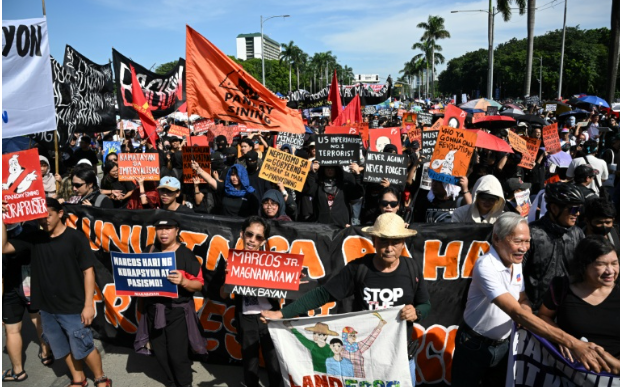
OCTOBER 16, 2025 — The Philippine economy is reeling from a massive crisis of confidence, sparked by revelations of widespread corruption in “ghost” flood control projects and amplified by a significant gaffe from a top financial official. The controversy has exposed a deep rot within public spending, driving both local and foreign investors into a defensive “wait-and-see” stance.
The scandal’s reach was magnified when Securities and Exchange Commission (SEC) Chairperson Francis Lim erroneously cited a “fictitious” social media report, claiming ₱1.7 trillion had been wiped out from the stock market due to the corruption probes. While the SEC later retracted the figure, confirming the actual market capitalization drop was a still-significant ₱186 billion (or up to ₱330 billion during peak tension), the initial shocking number had already inflicted psychological damage. As Lim himself warned: “Corruption is a weapon of mass wealth destruction. When trust breaks down, capital dries up, and everyone… pays the price.”
Business leaders, including Philippine Chamber of Commerce and Industry (PCCI) Chairman George Barcelon, confirmed that the underlying alarm is real. Barcelon noted that the scandal has created a profoundly negative image, particularly for foreign investors, who now perceive that “the whole government mechanism is involved.” U.S. Ambassador Jose Manuel Romualdez echoed this, warning that the Philippines risks losing between $100 billion to $150 billion in pledged investments unless the government acts swiftly.
The consequences go beyond market figures, crippling the backbone of the economy: Micro, Small, and Medium Enterprises (MSMEs). PCCI Vice President Bryan Ang articulated the outrage of small businesses, who see billions lost to corruption while they struggle for modest, collateral-backed loans. “Shouldn’t that money have been lent to SMEs instead?” Ang demanded, suggesting the government should utilize mechanisms like the Maharlika Investment Fund to inject capital and restore confidence by buying local stocks.
In response, the PCCI is demanding immediate and visible reforms, calling for prosecution and restitution instead of drawn-out, opaque hearings that only deepen public distrust. “At this point, there should be no more excuses,” Barcelon stated. The business community’s message is clear: the government must prioritize accountability and systemic reform to prove that justice, not impunity, prevails.
(Spanish) ‘PROYECTOS FANTASMA, PÉRDIDAS REALES’: LA CORRUPCIÓN EROSIONA BILLONES EN LA CONFIANZA FILIPINA
16 DE OCTUBRE DE 2025 — La economía filipina está sufriendo una crisis masiva de confianza, provocada por revelaciones de corrupción generalizada en proyectos “fantasma” de control de inundaciones y amplificada por un grave error de un alto funcionario financiero. La controversia ha expuesto una profunda podredumbre en el gasto público, llevando a inversores locales y extranjeros a una postura defensiva de “esperar y ver”.
El alcance del escándalo se magnificó cuando el presidente de la Comisión de Bolsa y Valores (SEC), Francis Lim, citó erróneamente un informe “ficticio” de redes sociales, afirmando que ₱1.7 billones se habían esfumado del mercado de valores debido a las investigaciones de corrupción. Aunque la SEC se retractó de la cifra, confirmando que la caída real de la capitalización de mercado fue de unos aún significativos ₱186 mil millones (o hasta ₱330 mil millones durante el pico de tensión), el impactante número inicial ya había infligido un daño psicológico. Como el propio Lim advirtió: “La corrupción es un arma de destrucción masiva de riqueza. Cuando la confianza se rompe, el capital se agota, y todos… pagan el precio”.
Los líderes empresariales, incluido el presidente de la Cámara de Comercio e Industria de Filipinas (PCCI), George Barcelon, confirmaron que la alarma subyacente es real. Barcelon señaló que el escándalo ha creado una imagen profundamente negativa, particularmente para los inversores extranjeros, quienes ahora perciben que “todo el mecanismo gubernamental está involucrado”. El embajador de Estados Unidos, Jose Manuel Romualdez, se hizo eco de esto, advirtiendo que Filipinas corre el riesgo de perder entre $100 mil millones y $150 mil millones en inversiones prometidas si el gobierno no actúa con rapidez.
Las consecuencias van más allá de las cifras del mercado, paralizando la columna vertebral de la economía: las Micro, Pequeñas y Medianas Empresas (MIPYMES). El vicepresidente de PCCI, Bryan Ang, articuló la indignación de las pequeñas empresas, que ven miles de millones perdidos por la corrupción mientras luchan por préstamos modestos y con garantía. “¿No debería haberse prestado ese dinero a las MIPYMES en su lugar?” preguntó Ang, sugiriendo que el gobierno debería utilizar mecanismos como el Maharlika Investment Fund para inyectar capital y restaurar la confianza comprando acciones locales.
En respuesta, la PCCI exige reformas inmediatas y visibles, pidiendo enjuiciamiento y restitución en lugar de audiencias prolongadas y opacas que solo profundizan la desconfianza pública. “En este momento, no debe haber más excusas”, afirmó Barcelon. El mensaje de la comunidad empresarial es claro: el gobierno debe priorizar la rendición de cuentas y la reforma sistémica para demostrar que la justicia, y no la impunidad, prevalece.