SÜMELA MONASTERY: ANCIENT WONDER REBORN AS GLOBAL ICON OF FAITH AND HERITAGE
Trabzon, Turkey – High amidst the mist-shrouded peaks of the Pontic Alps, where history clings to sheer rock faces, the legendary Sümela Monastery continues its resurgence, captivating pilgrims and tourists alike. This architectural marvel, carved dramatically into a cliff 1,200 meters above the Altındere Valley, is not merely a testament to ancient craftsmanship but a vibrant symbol of enduring faith and cultural heritage. Its story, stretching back to 386 AD, is one of resilience, abandonment, and a remarkable rebirth that solidifies its place as a global icon.
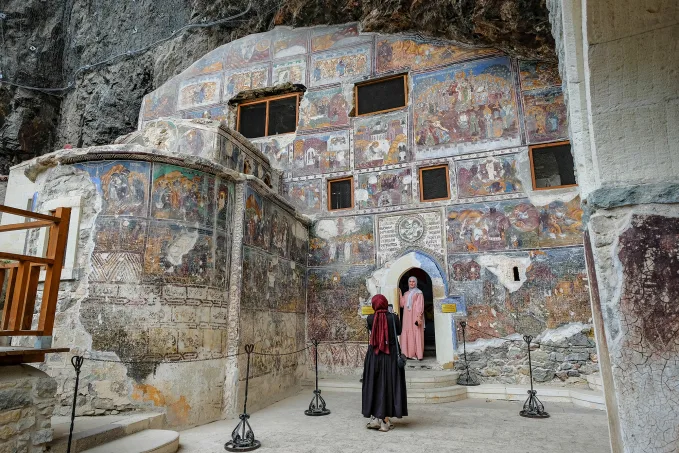
Founded by two Athenian monks, Barnabas and Sophronios, who were said to have discovered a miraculous icon of the Virgin Mary, Sümela Monastery rapidly grew into a powerhouse of Orthodox Christianity. It thrived under the Komnenos Dynasty, even receiving protection and privileges from Ottoman sultans after the conquest of Trabzon in 1461. For centuries, it served as a beacon for pilgrims from across the region, a spiritual sanctuary dedicated to the Virgin Mary (Panagia Soumela), housing priceless frescoes and offering solace in its breathtaking natural embrace. The monastery’s intricate network of chapels, monks’ cells, and its main Rock Church showcase stunning artistry, with vibrant frescoes depicting biblical narratives that echo the devotion of its former inhabitants.
The monastery faced its greatest challenge in 1923, when it was tragically abandoned due to the forced population exchange between Greece and Turkey. For decades, its majestic structures lay dormant, battling the elements and the ravages of time. However, a new chapter began with extensive, multi-million dollar restoration efforts launched by the Turkish government. These meticulous projects focused not only on structural stabilization and preserving the delicate frescoes but also on making the site safe and accessible for modern visitors. The result is a stunning revival that allows the monastery to reclaim its grandeur.
Today, Sümela Monastery is a crowning jewel of Turkish tourism, attracting hundreds of thousands annually who come to marvel at its audacious construction and profound spiritual aura. Beyond its role as a museum, the monastery has experienced a poignant return to its spiritual roots, with special Divine Liturgies permitted to be held on August 15th, the Feast of the Assumption, since 2010. This blend of historical preservation and renewed religious observance ensures that Sümela remains a powerful testament to human endeavor, faith, and the timeless allure of a truly unique heritage site.
MONASTERIO DE SÜMELA: ANTIGUA MARAVILLA RENACIDA COMO ICONO GLOBAL DE FE Y PATRIMONIO
Trabzon, Turquía – En lo alto de los picos cubiertos de niebla de los Alpes Pónticos, donde la historia se aferra a las escarpadas paredes rocosas, el legendario Monasterio de Sümela continúa su resurgimiento, cautivando a peregrinos y turistas por igual. Esta maravilla arquitectónica, dramáticamente tallada en un acantilado a 1.200 metros sobre el valle de Altındere, no es simplemente un testimonio de la artesanía antigua, sino un símbolo vibrante de fe perdurable y herencia cultural. Su historia, que se remonta al año 386 d.C., es una de resiliencia, abandono y un notable renacimiento que consolida su lugar como un icono global.
Fundado por dos monjes atenienses, Bernabé y Sofronio, de quienes se dice que descubrieron un icono milagroso de la Virgen María, el Monasterio de Sümela creció rápidamente hasta convertirse en una potencia del cristianismo ortodoxo. Prosperó bajo la dinastía Comnena, incluso recibiendo protección y privilegios de los sultanes otomanos después de la conquista de Trabzon en 1461. Para siglos, sirvió como un faro para peregrinos de toda la región, un santuario espiritual dedicado a la Virgen María (Panagia Soumela), albergando frescos invaluables y ofreciendo consuelo en su impresionante abrazo natural. La intrincada red de capillas, celdas de monjes y su iglesia principal excavada en la roca muestran un arte deslumbrante, con vibrantes frescos que representan narrativas bíblicas que hacen eco de la devoción de sus antiguos habitantes.
El monasterio se enfrentó a su mayor desafío en 1923, cuando fue trágicamente abandonado debido al intercambio forzado de población entre Grecia y Turquía. Durante décadas, sus majestuosas estructuras permanecieron inactivas, luchando contra los elementos y los estragos del tiempo. Sin embargo, un nuevo capítulo comenzó con extensos esfuerzos de restauración multimillonarios lanzados por el gobierno turco. Estos meticulosos proyectos se centraron no solo en la estabilización estructural y la preservación de los delicados frescos, sino también en hacer el sitio seguro y accesible para los visitantes modernos. El resultado es un resurgimiento impresionante que permite que el monasterio recupere su grandeza.
Hoy en día, el Monasterio de Sümela es una joya de la corona del turismo turco, que atrae a cientos de miles anualmente que vienen a maravillarse con su audaz construcción y su profunda aura espiritual. Más allá de su papel como museo, el monasterio ha experimentado un conmovedor regreso a sus raíces espirituales, con liturgias divinas especiales permitidas el 15 de agosto, Fiesta de la Asunción, desde 2010. Esta mezcla de preservación histórica y observancia religiosa renovada asegura que Sümela siga siendo un poderoso testimonio del esfuerzo humano, la fe y el encanto atemporal de un sitio patrimonial verdaderamente único.