THE GRANDMOTHER’S CRUCIBLE: HOW A PALESTINIAN COUPLE DEFIES GENOCIDAL WAR TO RAISE THIRTY-SIX ORPHANED GRANDCHILDREN IN GAZA
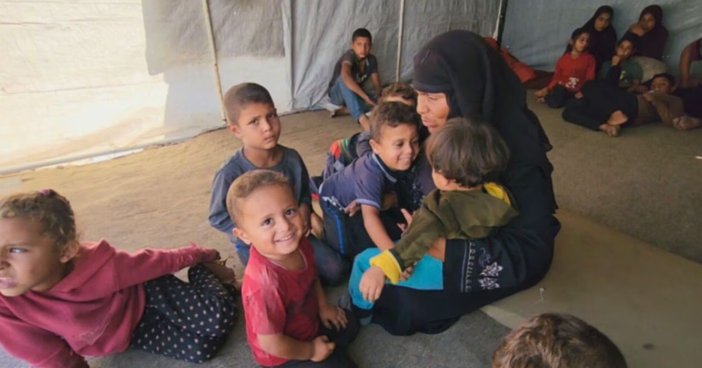
In the ravaged heart of Gaza City, amid ruins that whisper the names of the dead, a new generation is finding refuge under the roof of their steadfast grandparents. The story of Hamed and Rida Aliwa is not just one of survival, but a chronicle of profound, almost biblical, sacrifice in the face of what Al Jazeera describes as Israel’s two-year “genocidal war” on the enclave. The Aliwas are now the sole guardians to 36 orphaned grandchildren, a vast, sudden family forged in the crucible of loss.
Their personal tragedy is immense: during the relentless assault, Hamed and Rida lost their entire generation—all five of their sons were killed. The consequence is a haunting silence where their children’s voices once were, replaced by the collective needs of a bewildered group of young lives. This familial catastrophe mirrors the broader devastation across the strip. The Palestinian Central Bureau of Statistics reported a staggering figure in April 2025: more than 39,000 children in Gaza have been left without one or both parents. Of those, a crushing 17,000 children have been deprived of both parents since October 2023. The Aliwa grandchildren are not mere statistics; they are the living embodiment of this void.
Every day is a grinding battle for sustenance. Rida Aliwa, 60, speaks of the immense weight of her new reality: “It’s a huge responsibility that brings me immense stress.” The children, young veterans of war, have been forced to internalize survival tactics no child should know. They have learned to pool their meager resources, sharing a single loaf of bread among dozens, and to fall asleep not to lullabies, but to the terrifying, recurrent sound of explosions. As Hamed Aliwa told Al Jazeera, “The basic elements of life are almost impossible to find.” They lack guarantees, struggle constantly to fetch clean water, and have no certainty of permanent shelter against the perils of tomorrow.
The trauma is compounded by Rida’s unyielding grief. “I would be lying if I said I didn’t miss them,” she confided, her heart aching for her lost sons who “meant everything” and “were the reason I kept going.” Yet, the 36 children who now call her mother and Hamed father are her new, uncompromising purpose. Their tiny, demanding presences are an obligation that transcends despair, a mandate to ensure the survival of the Aliwa lineage.
Even with a fragile, US-brokered ceasefire in effect since October 10, the fear is a constant companion. The family is trapped under the relentless hum of drones, which “keep us awake all night,” and the crippling anxiety that “the war could start again.” As hundreds of thousands return to the ravaged north, facing critical shortages, the Aliwas and their 36 charges embody the existential struggle of a population left to build a life from ashes. Their chronicle is one of a new family, bound by grief and fueled by a grandmother’s love, determined to defy the odds in the ruins of their homeland.
EL CRISOL DE LA ABUELA: CÓMO UNA PAREJA PALESTINA DESAFÍA LA GUERRA GENOCIDA PARA CRIAR A TREINTA Y SEIS NIETOS HUÉRFANOS EN GAZA
En el corazón devastado de la ciudad de Gaza, entre ruinas que susurran los nombres de los difuntos, una nueva generación está encontrando refugio bajo el techo de sus inquebrantables abuelos. La historia de Hamed y Rida Aliwa no es solo de supervivencia, sino una crónica de sacrificio profundo, casi bíblico, frente a lo que Al Jazeera describe como la “guerra genocida” de Israel durante dos años en el enclave. Los Aliwa son ahora los únicos custodios de 36 nietos huérfanos, una vasta y repentina familia forjada en el crisol de la pérdida.
Su tragedia personal es inmensa: durante la implacable ofensiva, Hamed y Rida perdieron a toda su generación: sus cinco hijos fueron asesinados. La consecuencia es un silencio inquietante donde una vez estuvieron las voces de sus hijos, reemplazado por las necesidades colectivas de un grupo desconcertado de jóvenes vidas. Esta catástrofe familiar refleja la devastación generalizada en toda la Franja. La Oficina Central de Estadísticas de Palestina reportó una cifra asombrosa en abril de 2025: más de 39,000 niños en Gaza han quedado sin uno o ambos padres. De ellos, unos aplastantes 17,000 niños han sido privados de ambos padres desde octubre de 2023. Los nietos Aliwa no son meras estadísticas; son la encarnación viva de este vacío.
Cada día es una agotadora batalla por la subsistencia. Rida Aliwa, de 60 años, habla del inmenso peso de su nueva realidad: “Es una responsabilidad enorme que me provoca un estrés inmenso”. Los niños, jóvenes veteranos de guerra, se han visto obligados a interiorizar tácticas de supervivencia que ningún niño debería conocer. Han aprendido a compartir sus escasos recursos, repartiendo una única hogaza de pan entre docenas, y a conciliar el sueño no con canciones de cuna, sino con el sonido aterrador y recurrente de las explosiones. Como Hamed Aliwa le dijo a Al Jazeera, “Los elementos básicos de la vida son casi imposibles de encontrar.” Carecen de garantías, luchan constantemente por conseguir agua potable y no tienen certeza de un refugio permanente contra los peligros del mañana.
El trauma se ve agravado por el dolor incesante de Rida. “Mentiría si dijera que no los extraño”, confesó, con el corazón adolorido por sus hijos perdidos que “lo significaban todo” y “eran la razón por la que seguía adelante”. Sin embargo, los 36 niños que ahora la llaman madre y a Hamed padre son su nuevo y decidido propósito. Sus pequeñas y exigentes presencias son una obligación que trasciende la desesperación, un mandato para asegurar la supervivencia del linaje Aliwa.
Incluso con un frágil alto el fuego negociado por Estados Unidos en vigor desde el 10 de octubre, el miedo es un compañero constante. La familia vive atrapada bajo el zumbido implacable de los drones, que “nos mantienen despiertos toda la noche”, y la ansiedad paralizante de que “la guerra pueda comenzar de nuevo”. Mientras cientos de miles regresan al norte devastado, enfrentando una escasez crítica, los Aliwa y sus 36 hijos encarnan la lucha existencial de una población que tiene que construir una vida a partir de las cenizas. Su crónica es la de una nueva familia, unida por el duelo y alimentada por el amor de una abuela, decidida a desafiar las probabilidades en las ruinas de su patria.