THE SAHARA OF THE EAST: WATER CRISIS IN RUSSIAN-ANNEXED DONBAS BECOMES A ‘TICKING ENVIRONMENTAL BOMB’
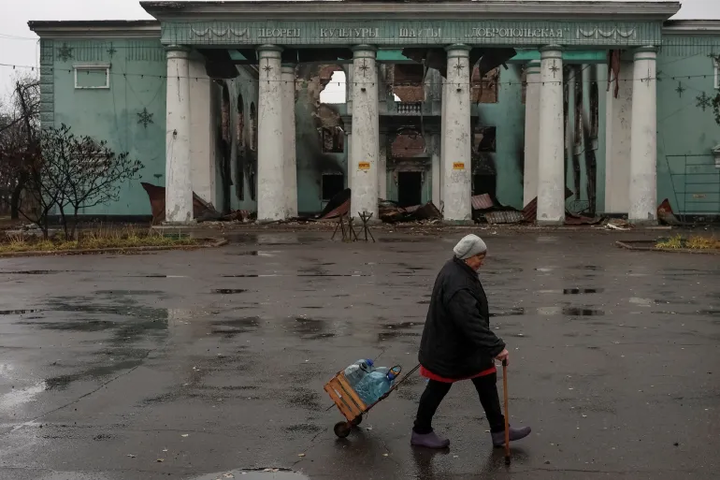
The frontline town of Dobropillia in the Russian-annexed Donbas region of Ukraine is a portrait of quiet desperation. Residents are now resorting to survivalist hacks—like wrapping plastic bags around tree branches to collect evaporated moisture—just to secure drinkable water. This struggle for hydration defines a worsening humanitarian and ecological crisis that experts warn has turned the Donbas into a “ticking environmental bomb,” a consequence of years of war, damaged infrastructure, and unchecked industrial contamination.
The severity of the crisis is immediate and systemic. The region’s intricate, centralized water supply system, built for a dense industrial area, has been largely destroyed by continuous shelling since the war intensified. Residents of Donbas, a region once home to 6.5 million people, are now reportedly receiving running water for only a few hours per week. A mother of two in the city of Donetsk, who spoke anonymously for fear of reprisal, lamented to Al Jazeera: “Donetsk is now [the] Sahara.” Families are forced to forgo basic hygiene, wiping themselves with wet cloths instead of taking showers.
The scant water that does flow is often unusable. Reports on local Telegram channels describe tap water as “the colour of urine,” pungent, yellow, or brown, requiring boiling and filtering even when available. The lack of water has created a severe sanitation crisis; residents are resorting to collecting feces in plastic bags, which are often discarded haphazardly. Ukrainian officials have already reported outbreaks of water-borne diseases like cholera and dysentery.
The man-made drought is being fatally compounded by an environmental catastrophe stemming from the region’s industrial past and wartime negligence. Uncontrolled mining, which the Kremlin has allegedly spurred since 2022, is causing tectonic cracks that swallow entire bodies of water. More critically, the practice of stopping the pumping of water from abandoned mines is allowing chemicals, heavy metal salts, and methane to rise to the surface, poisoning the remaining groundwater, lakes, and rivers. A chilling environmental threat looms: the potential emergence of radioactive isotopes. An expert warned that by 2026, contaminated water will mix with the groundwater from the Yunyi Kommunar coal mine, where the Soviet Union “experimentally” detonated a nuclear bomb in 1979 to prevent methane outbursts.
Moscow’s attempts to solve the water scarcity have proven insufficient and mired in corruption. A recently completed $2.45 billion canal from the Don River, overseen by a deputy defense minister later jailed for embezzlement, has repeatedly malfunctioned due to poor quality pipes. It delivers only a fraction of what the city of Donetsk requires. Even Russian President Vladimir Putin publicly admitted that the new canal “doesn’t solve all problems,” following a public video appeal from Donetsk children begging him to restore their water supply. With experts predicting the central Donetsk region will face “harsh water rations for at least the nearest decade,” the crisis underscores the profound human and ecological cost of the conflict, demonstrating that the war’s damage extends far beyond the immediate battlefield.
LA BOMBA AMBIENTAL DE RELOJERÍA: LA CRISIS HÍDRICA EN EL DONBÁS ANEXADO POR RUSIA SE CONVIERTE EN UNA CATÁSTROFE ECOLÓGICA
La ciudad de Dobropillia, en la región del Donbás anexionada por Rusia en Ucrania, es un retrato de desesperación silenciosa. Los residentes han recurrido a trucos de supervivencia, como envolver ramas de árboles en bolsas de plástico para recolectar humedad evaporada, solo para asegurarse agua potable. Esta lucha por la hidratación define una crisis humanitaria y ecológica en empeoramiento que, según advierten los expertos, ha convertido al Donbás en una “bomba ambiental de relojería”, consecuencia de años de guerra, infraestructura dañada y una contaminación industrial descontrolada.
La gravedad de la crisis es inmediata y sistémica. El complejo sistema centralizado de suministro de agua de la región, construido para un área industrial densa, ha sido destruido en gran parte por el continuo bombardeo desde que se intensificó la guerra. Se informa que los residentes del Donbás, una región que alguna vez albergó a 6.5 millones de personas, ahora reciben agua corriente solo por unas pocas horas a la semana. Una madre de dos hijos en la ciudad de Donetsk, que habló de forma anónima por temor a represalias, lamentó a Al Jazeera: “Donetsk es ahora [el] Sahara“. Las familias se ven obligadas a prescindir de la higiene básica, limpiándose con paños húmedos en lugar de ducharse.
La poca agua que fluye a menudo es inutilizable. Los informes en los canales locales de Telegram describen el agua del grifo como “del color de la orina,” picante, amarilla o marrón, requiriendo ser hervida y filtrada incluso cuando está disponible. La falta de agua ha creado una grave crisis de saneamiento; los residentes están recurriendo a recolectar heces en bolsas de plástico, que a menudo son desechadas de manera descuidada. Funcionarios ucranianos ya han reportado brotes de enfermedades transmitidas por el agua como el cólera y la disentería.
La sequía artificial se está agravando fatalmente por una catástrofe ambiental que se deriva del pasado industrial de la región y la negligencia en tiempos de guerra. La minería descontrolada, que el Kremlin supuestamente ha impulsado desde 2022, está causando grietas tectónicas que tragan cuerpos de agua enteros. De manera más crítica, la práctica de detener el bombeo de agua de minas abandonadas está permitiendo que productos químicos, sales de metales pesados y metano suban a la superficie, envenenando el agua subterránea, lagos y ríos restantes.
Una escalofriante amenaza ambiental se cierne sobre la región: la posible aparición de isótopos radiactivos. Un experto advirtió que para el año 2026, el agua contaminada se mezclará con el agua subterránea de la mina de carbón Yunyi Kommunar, donde la Unión Soviética detonó “experimentalmente” una bomba nuclear en 1979 para prevenir estallidos de metano.
Los intentos de Moscú para resolver la escasez de agua han resultado insuficientes y envueltos en corrupción. Un canal de $2.45 mil millones completado recientemente desde el río Don, supervisado por un viceministro de defensa que luego fue encarcelado por malversación, ha fallado repetidamente debido a la mala calidad de las tuberías. Solo entrega una fracción de lo que la ciudad de Donetsk necesita. Incluso el presidente ruso Vladimir Putin admitió públicamente que el nuevo canal “no resuelve todos los problemas”, después de un llamamiento público en video de niños de Donetsk rogándole que restableciera su suministro de agua. Con expertos que predicen que la región central de Donetsk enfrentará “duras raciones de agua durante al menos la próxima década,” la crisis subraya el profundo costo humano y ecológico del conflicto, demostrando que el daño de la guerra se extiende mucho más allá del campo de batalla inmediato.