



LOOSE ENDS AND THE CROWN: LOUVRE GUARD’S HASTY RESPONSE FOILS $10M HEIST, RECOVERS ‘CROWN OF GENIUS’
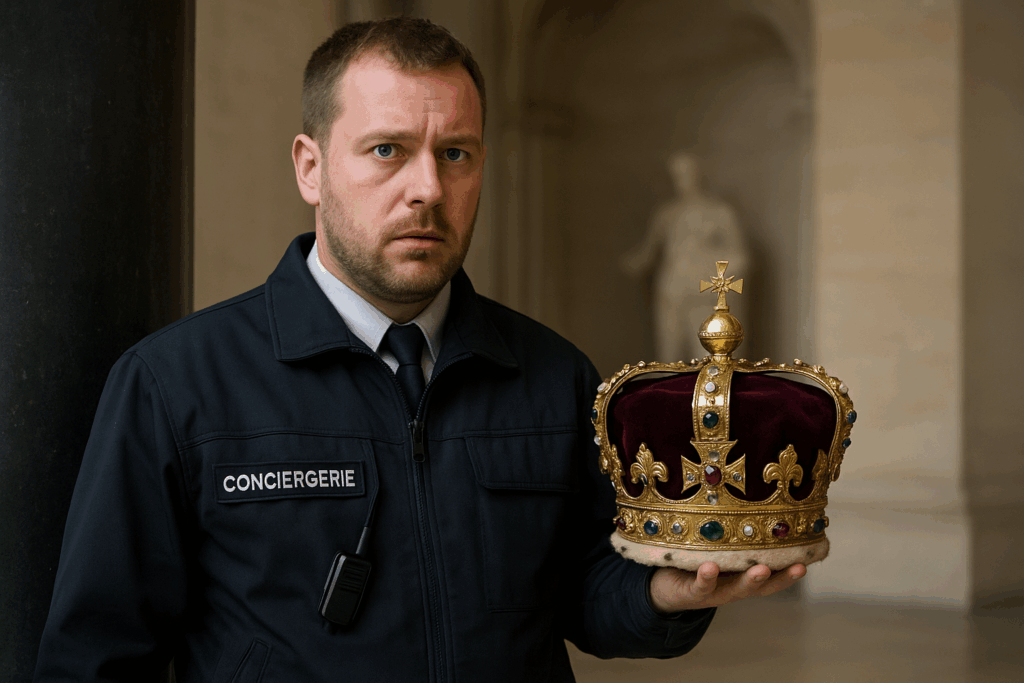
The hallowed halls of the Louvre, repositories of the world’s most precious treasures, briefly became the stage for a cinematic crime, only to have the plot foiled by the quick thinking of a dedicated security guard. In an account that reads like a thriller, a guard recounts the chaotic minutes surrounding the daring daylight heist at the museum’s famed Galerie d’Apollon, culminating in the stunning recovery of the priceless Crown of Genius—an item valued at an estimated $10 million.
The incident unfolded unexpectedly during the guard’s routine 9:00 to 9:30 AM shift. The calm of the morning was shattered by an urgent radio alert from colleagues. “Alert, alert, something very serious, very urgent is happening at the Galerie d’Apollon,” the distressed voice echoed over the airwaves. The guard’s hierarchy immediately redirected his attention: he was to sprint to the exterior, the area under his team’s jurisdiction.
There was no time for contemplation, only action. The guard didn’t hesitate, grabbing his essential tools: a heavy-duty flashlight and his personal cell phone. His intention was clear: not to confront the armed perpetrators, but to become a camera for justice. “I didn’t think I was going to stop the wrongdoers, but I thought the police would need photos of the wrongdoers and possibly videos,” he explained, transforming a common accessory into an impromptu piece of evidence-gathering equipment.
He arrived at the scene just “a few seconds after their flight.” The sight was one of organized chaos: a police car, coincidentally passing by, was already giving chase to the fleeing perpetrators, who were making their escape on scooters. The immediate physical evidence of the heist was striking: a strong, pungent smell of gasoline permeated the air, coming from pierced fuel tanks presumably damaged during the escape, an indication of the crude violence and haste involved in the crime.
Then came the crucial discovery. Amidst the discarded material and the residue of the failed escape, the guard noticed a small object. It was positioned so awkwardly and was so diminutive that his mind first dismissed it as a mere piece of decorative scaffolding or debris. But upon closer inspection, the object revealed its true, magnificent identity: it was the Crown of Genius (la couronne de Génie), one of the most significant artifacts targeted in the robbery.
The guard’s hypothesis regarding the recovery is simple but profound: “I am certain that it was the precipitation of having seen our colleagues arrive at the scene that made them lose their nerve.” He concluded that, in their panicked rush, the thieves fumbled the loot as they vaulted over the balcony railing. The loss of such a primary target was not a minor error; it was a devastating setback that “completely thwarted their plan.” The recovery of the crown, attributed to the alert response of the guard and his colleagues, turned a potentially catastrophic security breach into a testament to the vigilance of the Louvre’s security detail, proving that sometimes, the simple act of running fast with a flashlight is enough to defeat the elaborate plans of career criminals.
CABO SUELTO Y LA CORONA: LA RÁPIDA RESPUESTA DE UN GUARDA DEL LOUVRE FRUSTRA EL ATRACO Y RECUPERA LA ‘CORONA DE GENIO’ DE $10 MILLONES
Los venerables salones del Louvre, custodios de los tesoros más preciados del mundo, se convirtieron fugazmente en el escenario de un crimen de película, solo para ver cómo el complot era frustrado por la astucia y la respuesta inmediata de un guardia de seguridad. En un relato que parece sacado de una crónica negra, un vigilante narra los caóticos minutos que rodearon el audaz atraco a plena luz del día en la famosa Galería de Apolo del museo, que culminó con la asombrosa recuperación de la invaluable Corona de Genio—una pieza estimada en $10 millones de dólares.
El incidente se desarrolló de manera inesperada durante el turno matutino del guardia, entre las 9:00 y las 9:30 AM. La calma de la mañana fue destrozada por una alerta radial urgente de sus compañeros. “Alerta, alerta, está pasando algo muy grave, muy urgente en la Galería de Apolo”, resonó la voz angustiada por las ondas. La jerarquía del guardia inmediatamente le dio una orden crucial: debía correr a toda velocidad hacia el exterior, el área que estaba bajo la jurisdicción de su equipo.
No hubo tiempo para la contemplación, solo para la acción. El guardia no dudó, agarrando sus herramientas esenciales: una linterna de mano y su teléfono móvil personal. Su intención era clara: no confrontar a los perpetradores armados, sino convertirse en una cámara para la justicia. “No pensé que iba a detener a los malhechores, pero pensé que la policía necesitaría fotos de los malhechores y posiblemente videos”, explicó, transformando un accesorio común en un equipo improvisado para la recopilación de pruebas.
Llegó a la escena “solo unos segundos después de su huida”. La imagen era de un caos organizado: un coche de policía, que casualmente pasaba por allí, ya estaba persiguiendo a los criminales en fuga, quienes escapaban en scooters. La evidencia física inmediata del atraco era impactante: un fuerte y acre olor a gasolina impregnaba el aire, proveniente de tanques de combustible perforados, un indicio de la violencia y la prisa burda involucradas en el crimen.
Luego vino el descubrimiento crucial. En medio del material desechado y el residuo de la fuga fallida, el guardia notó un objeto diminuto. Estaba colocado de forma tan extraña y era tan pequeño que su mente lo descartó inicialmente como un mero elemento de andamio decorativo o escombros. Pero tras una inspección más cercana, el objeto reveló su verdadera y magnífica identidad: era la Corona de Genio (la couronne de Génie), uno de los artefactos más importantes y específicos que estaban buscando los atracadores.
La hipótesis del guardia sobre la recuperación es sencilla pero profunda: “Estoy seguro de que fue la precipitación de haber visto llegar a nuestros colegas al lugar lo que les hizo perder los estribos”. Concluyó que, en su apresurado pánico, los ladrones perdieron el botín al saltar por encima de la barandilla del balcón. La pérdida de un objetivo tan primario no fue un error menor; fue un revés devastador que “contrarió por completo su plan”. La recuperación de la corona, atribuida a la alerta y respuesta del guardia y sus colegas, convirtió una brecha de seguridad potencialmente catastrófica en un testimonio de la vigilancia del equipo de seguridad del Louvre, demostrando que a veces, el simple acto de correr rápido con una linterna es suficiente para derrotar los elaborados planes de los criminales profesionales.


